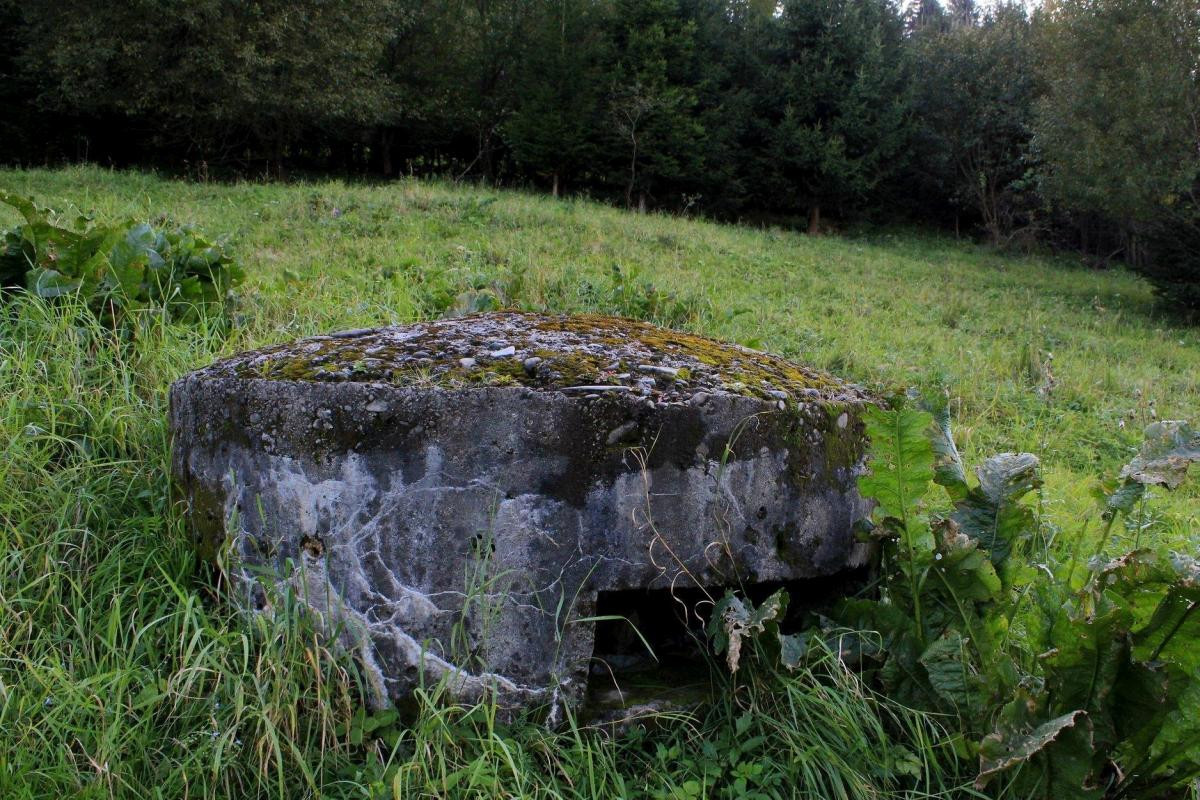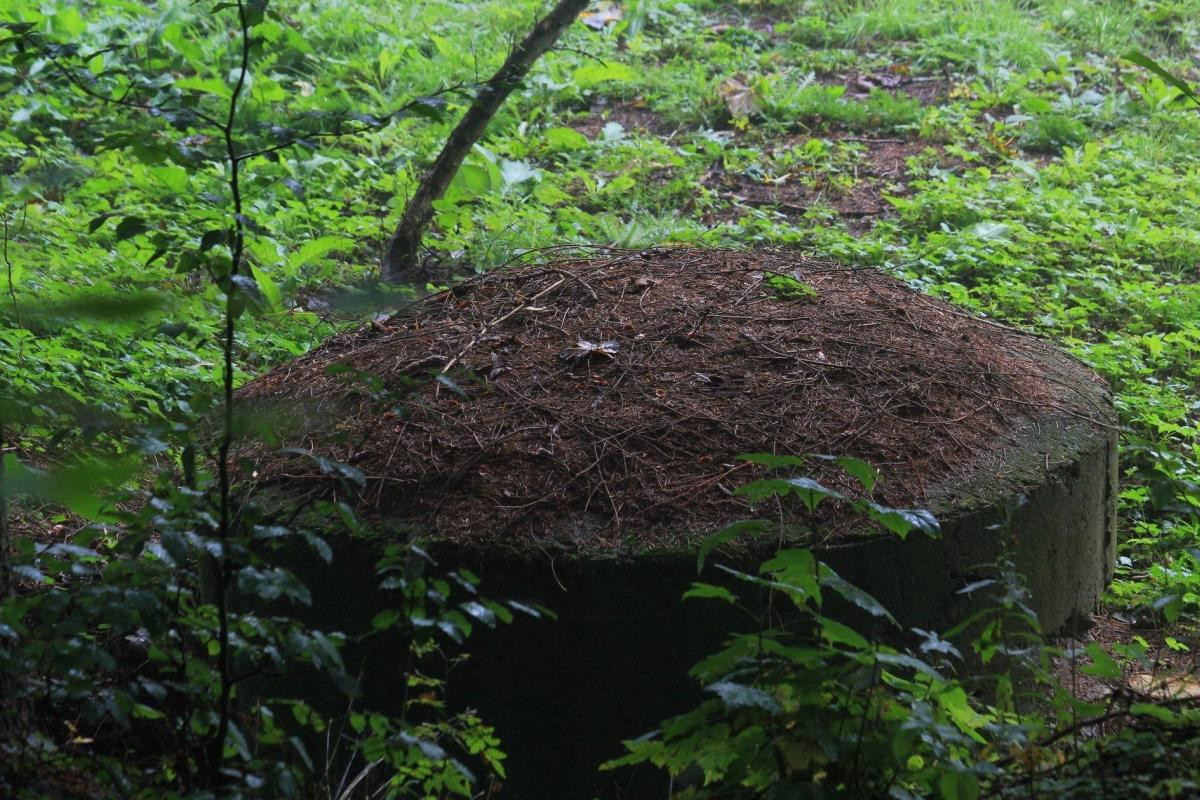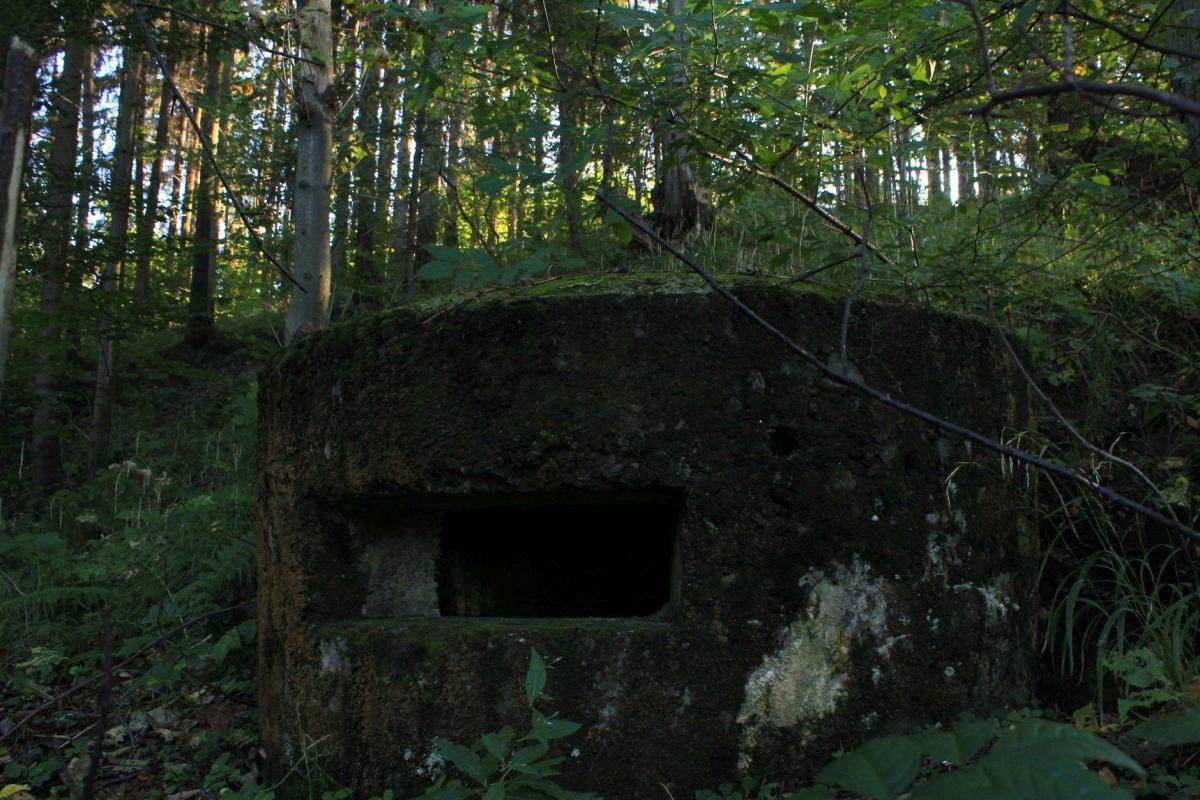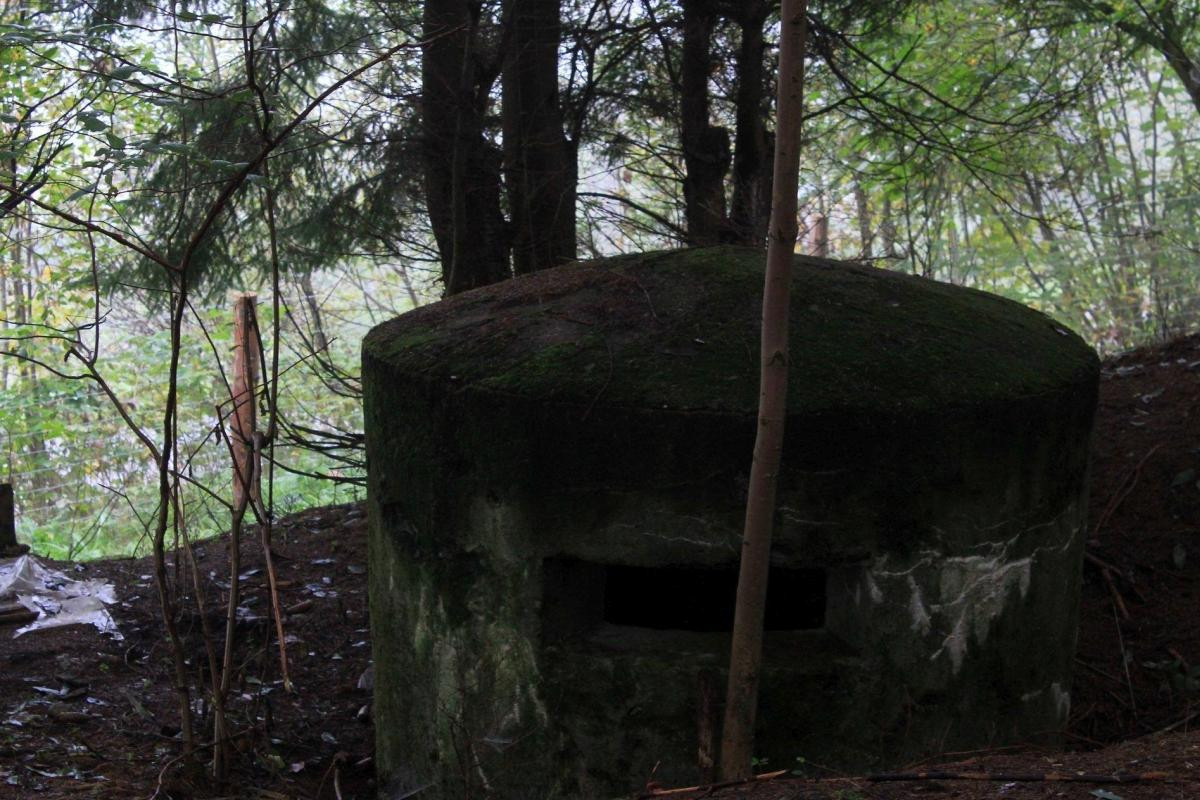
 More than two dozens of bunkers, hundreds of meters of connecting trenches, remains of observation and command posts have been preserved in the local forests, on pastures, meadows, and in the gardens of the local houses.
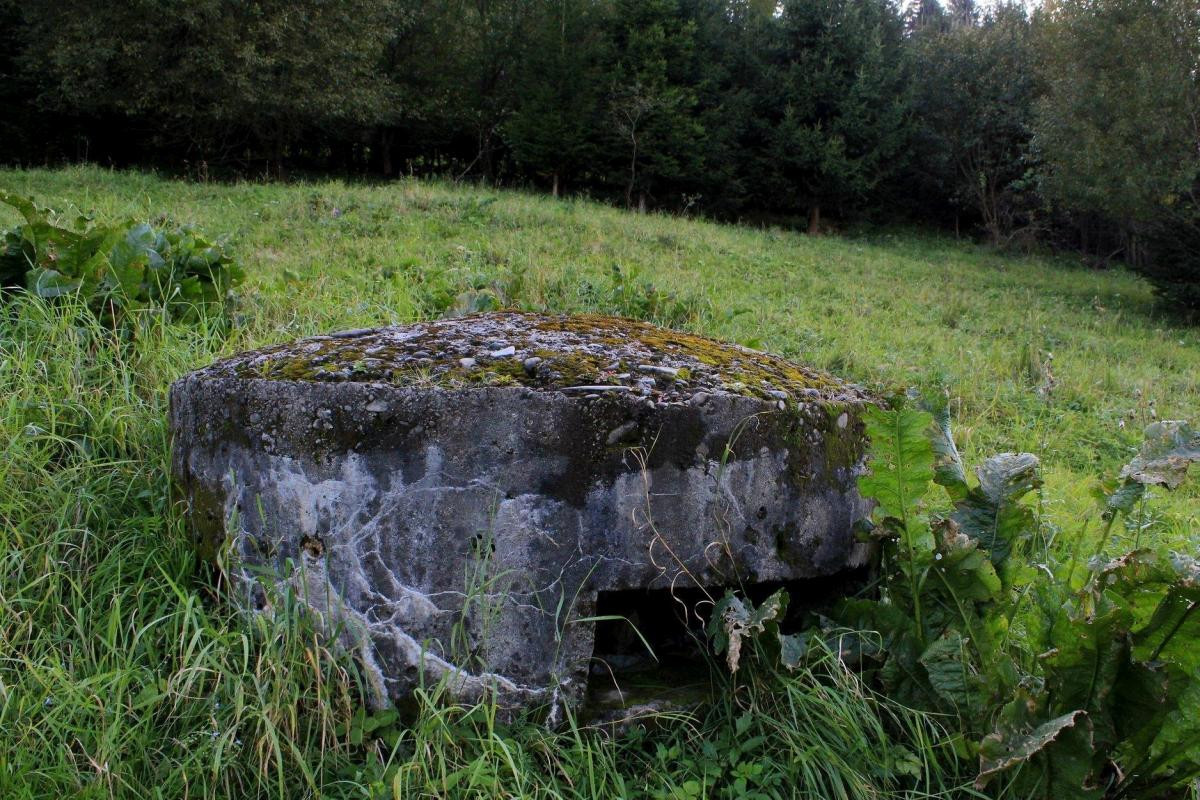
These are the remains of the fortification works made by the German army and the inhabitants of Zákopčie in a futile effort to prevent the Soviets from advancing in 1944/45. Nowaday, they are standing there as an important memento of the war and its victims, which must not be forgotten. Most likely, these are machine gun and observation nests called "Kochbunker", named after the designer of this object, Erich Koch. From the technical and construction point of view, it is a reinforced concrete structure with a circular plan with an external diameter of 185 cm and a structural height of approx. 200 cm, which protrudes approx. 50 to 80 cm above the ground.
The thickness of the concrete wall reinforced with iron bars is 28-30 cm. Each bunker had two observation holes measuring 25 x 60 cm and an entrance. The appearance of the surface of the concrete structure and other factors indicate that the bunkers were built on site by pouring concrete into pre-prepared formwork with reinforcement installed. The geometric accuracy of the construction of the cylinder itself, part of the spherical surface - the ceiling, and the quality of the concrete itself after 60 years are remarkable. This is only basic information about the found bunkers installed in the original terrain but also excavated and relocated to other places in the part of the village from Flašík towards Zákopčie centre and in the part of the village near Tarabov.