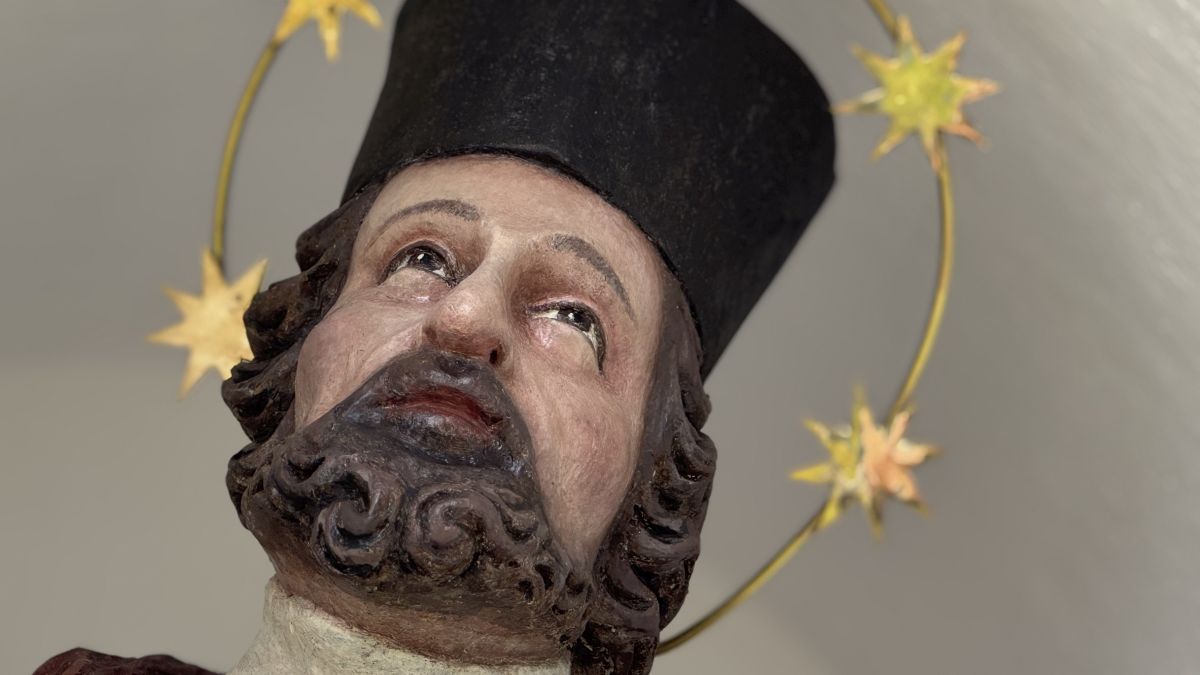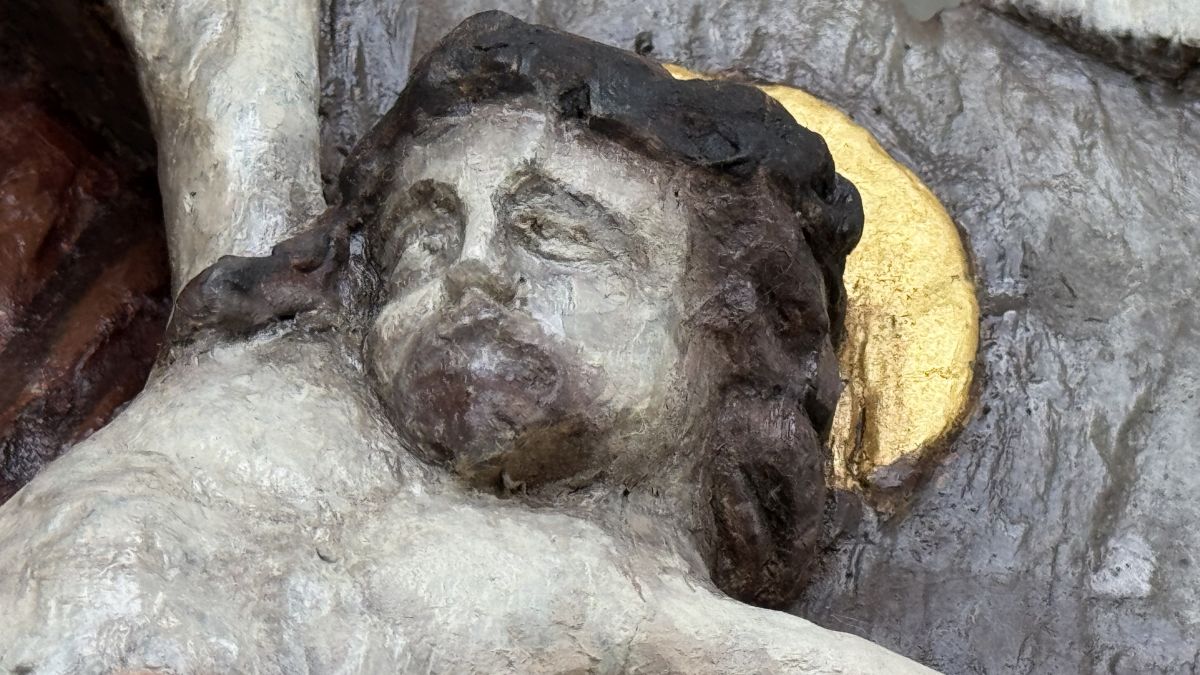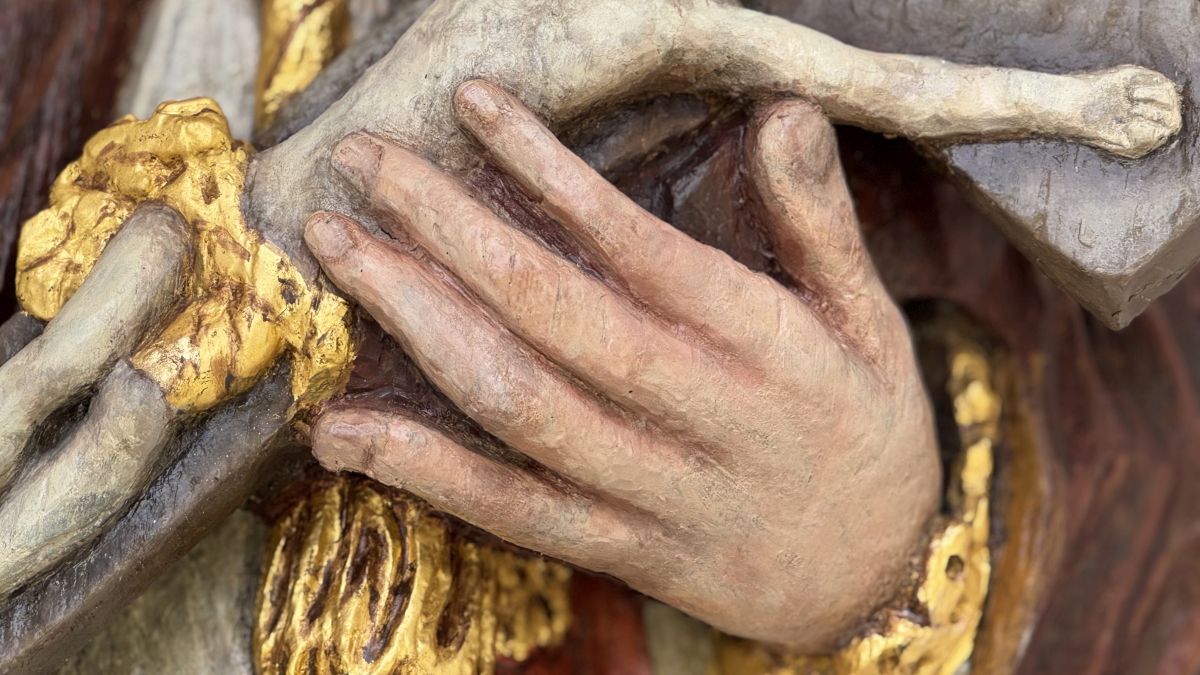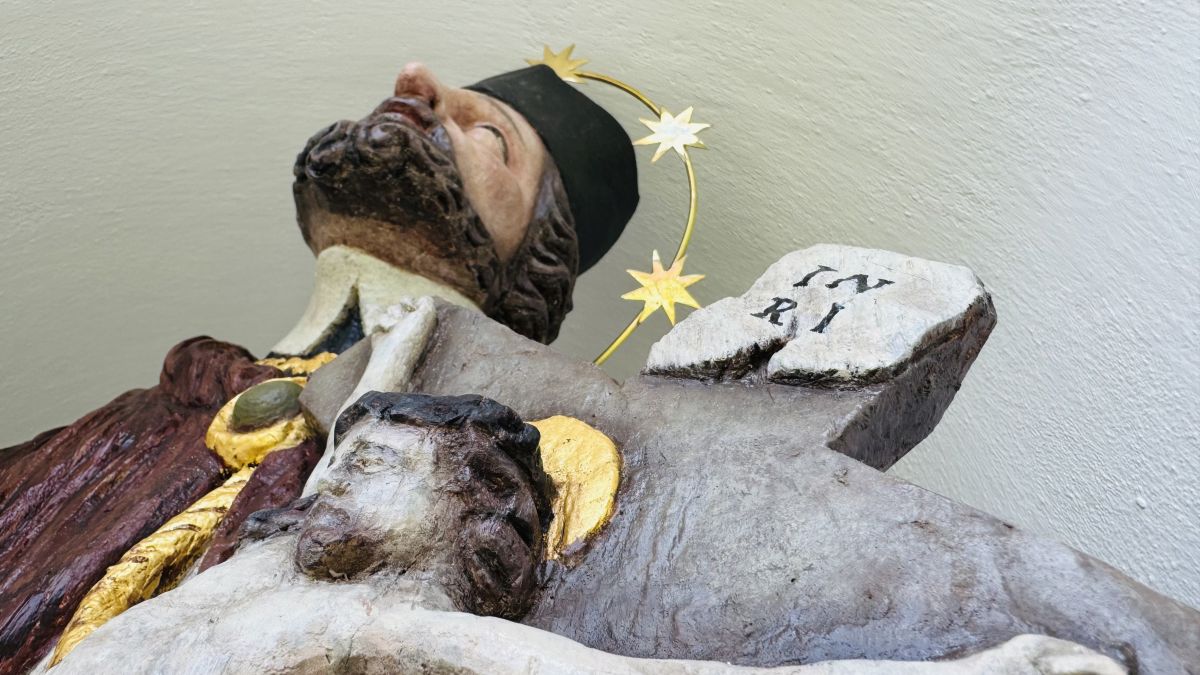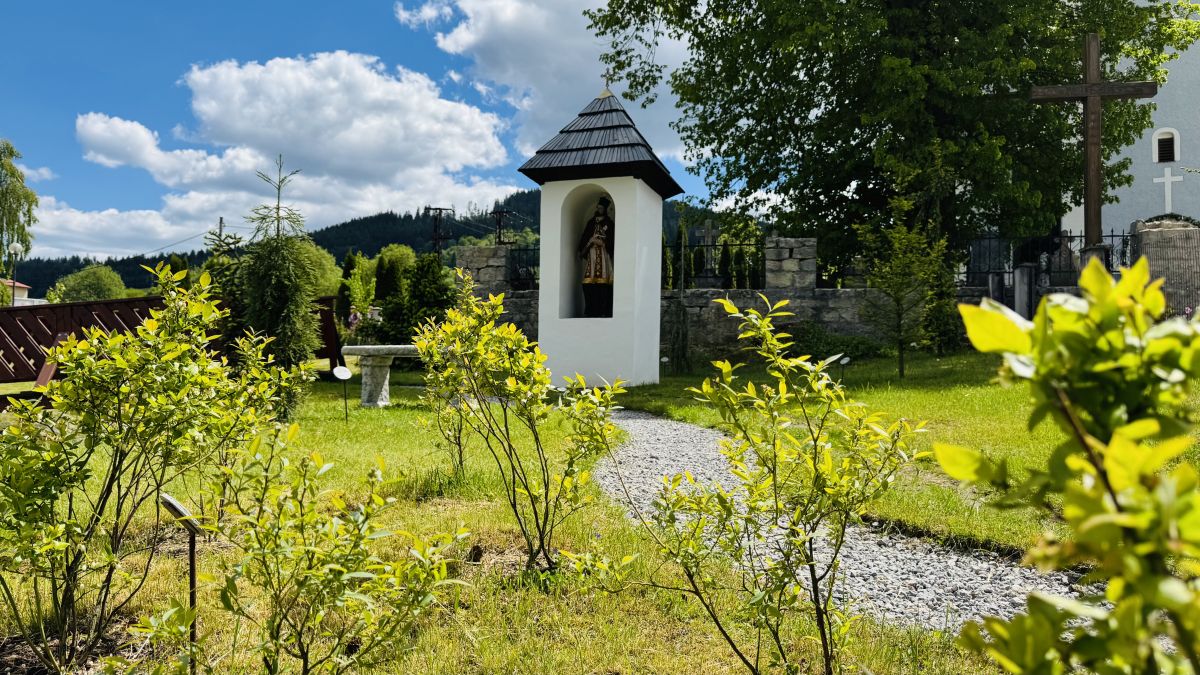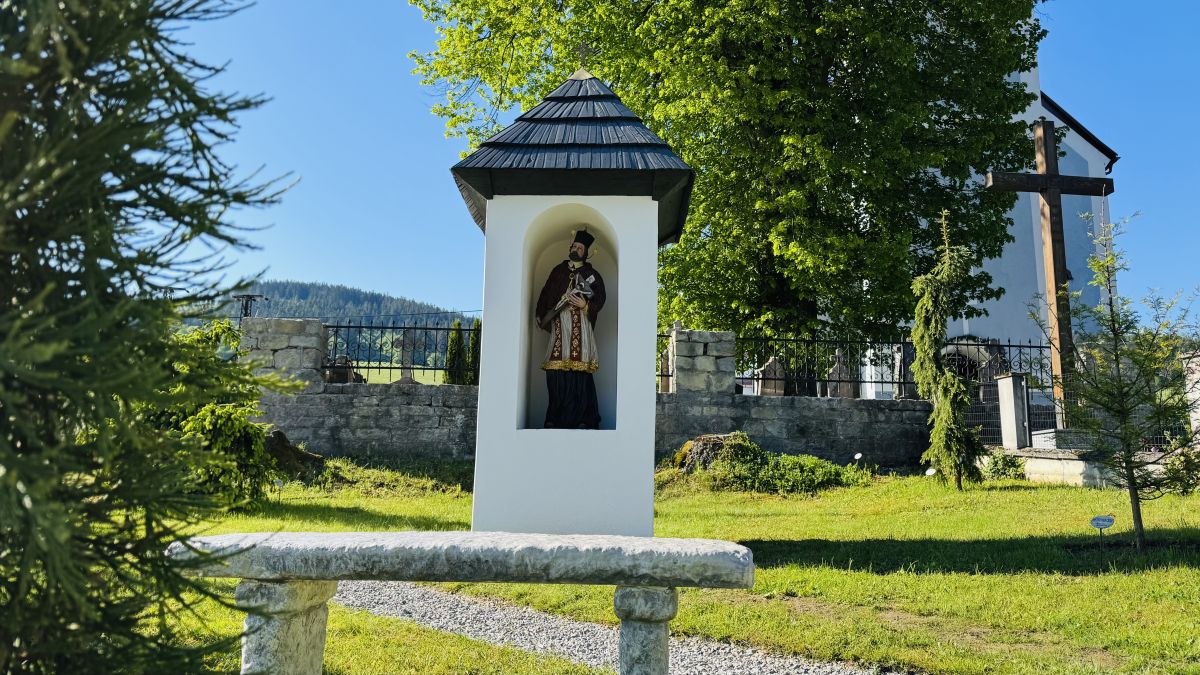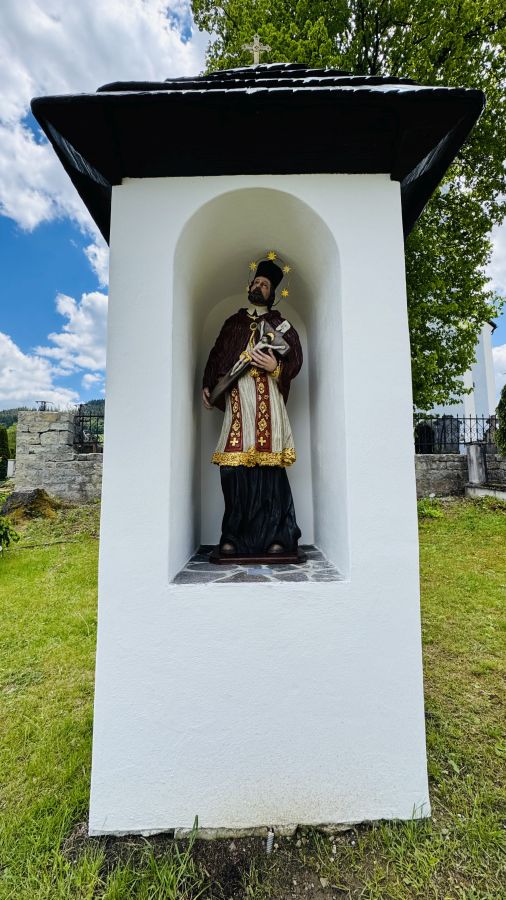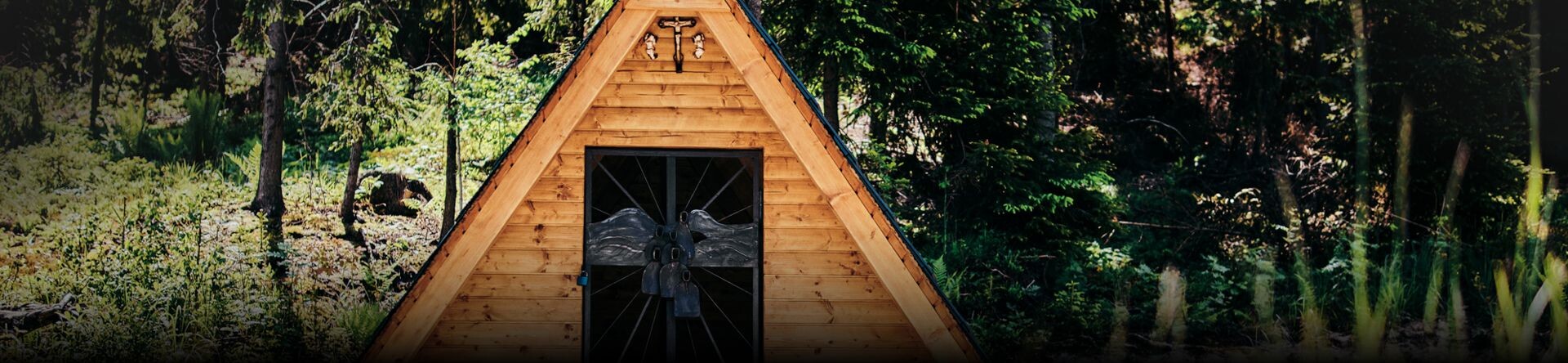
 The pillar shrine is already marked on the Second Military Mapping from 1824. It is more than 200 years old, with a square base, prismatic shape, and a pyramid-shaped roof.
Date of Construction: The first written mention dates back to 1798, with its presumed origin in the second half of the 18th century.
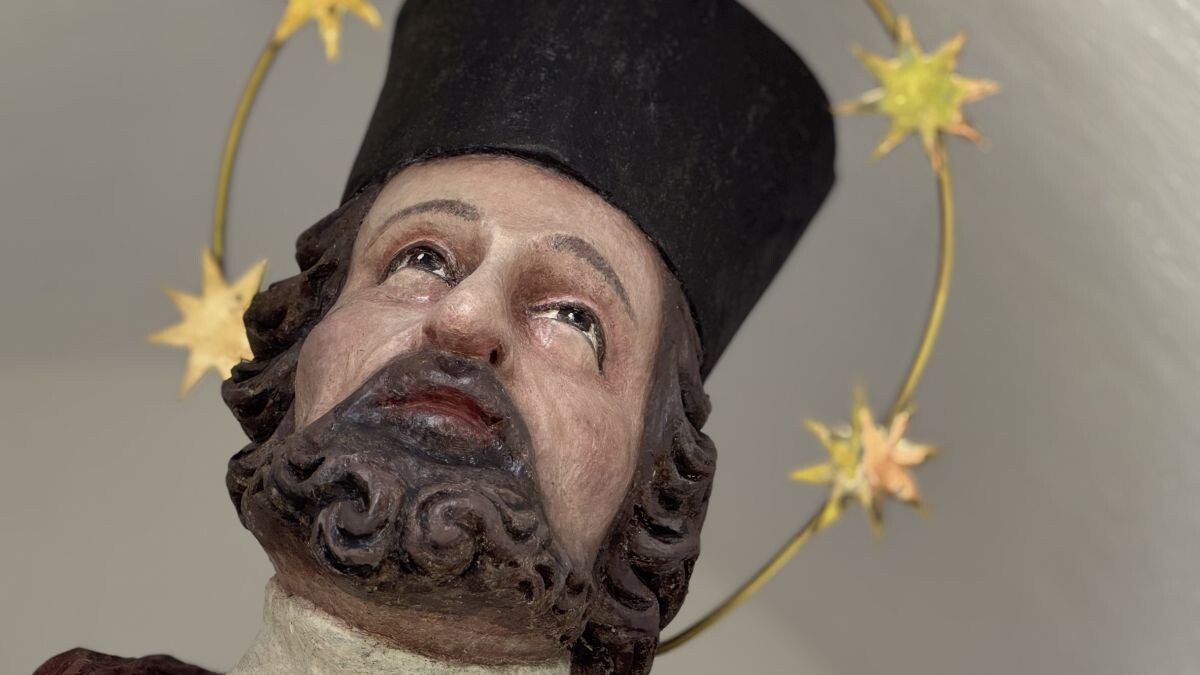
Dedication: St. John of Nepomuk
Location: Originally in Vysoká nad Kysucou, Ústredie, near the railway line, GPS: 49.3788972N, 18.5375811E
After relocation, the current position is: Ústredie, parish garden, GPS: 49.3787083N, 18.5462736E
Material: A combination of stone/brick, plaster, wooden truss, and shingle
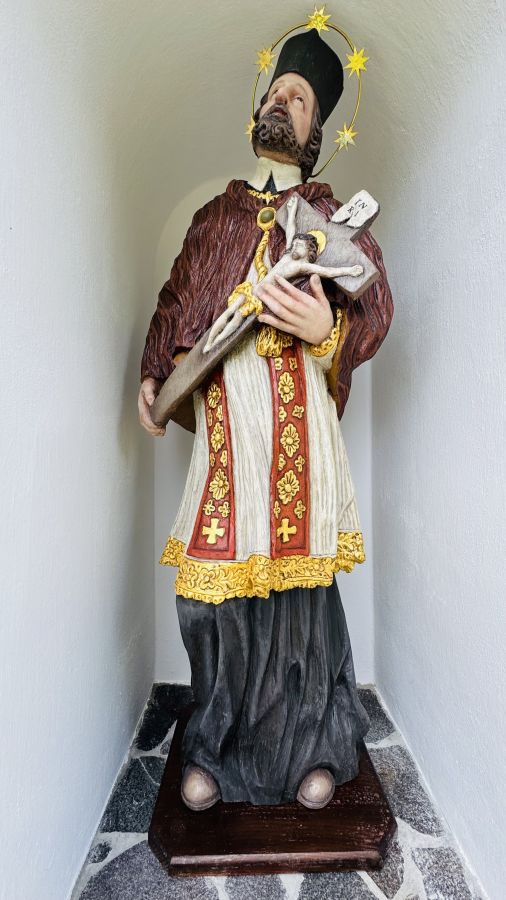
Statue: St. John of Nepomuk, 132 cm tall
Date of Blessing: Unknown; after renovation and restoration on May 16, 2025
Builder: Unknown; restored by PhDr. Ján Vrbata, Dean and Parish Priest of Turzovka
Donor: Unknown
Consecrator: Unknown
Dimensions: Width 115 cm × Length 115 cm, Height to the roof 260 cm; Niche: Width 61 cm × Height 143 cm
Description:
This is a pillar shrine with a square footprint, a prismatic shape, and a pyramid roof. The cult of St. John of Nepomuk in Vysoká is documented even before his canonization (beatified in 1721, canonized on March 19, 1729). The first mention of a statue of St. John in Vysoká dates back to 1728, near Pavelka's house, though the exact location is unknown today. However, we can confidently associate the restored shrine with a 1798 mention that states a wooden statue of St. John of Nepomuk was placed in a masonry pillar, maintained by Juraj Kľačko, the curator of the Vysoká church. This suggests that the shrine was built in the second half of the 18th century. Initially, the statue likely stood on a stone pedestal, later enclosed with bricks and plastered with lime to protect it from the weather.
Original Location Significance:
The shrine’s original location is found on the 1824 Second Military Mapping. St. John was the patron of bridges, sailors, raftsmen, millers, priests, and confessors, as well as a protector against water disasters. Interestingly, the original location was not near any water source or bridge, not even historically. Both the Kysuca River (northwest) and the Dučkov stream (east) flowed at a considerable distance. This raises the question of why the shrine was erected essentially in open fields near a dirt road leading from the main highway to Vrchrieka. It is possible—similar to other Slovak villages—that the function of the statue shifted, and it was believed that the patron saint would prevent droughts and bring rainfall. The relocation of the shrine has since renewed its symbolic role as a protector against water elements and patron of bridges.
Unique Characteristics:
Although the statue is displayed outdoors, it is fully carved from oak wood—solid, not hollowed or beveled from the back, unlike indoor statues. Several statues of this saint still exist in Kysuce, mostly by roadsides, but all are made of stone (e.g., Turzovka, Raková, Čadca, Krásno nad Kysucou, Stará Bystrica, Nová Bystrica, Nesluša, and Kysucké Nové Mesto). The uniqueness of the Vysoká statue lies in its masterful craftsmanship from solid oak by an unknown woodcarver, likely chosen for its weather resistance.
Restoration:
The statue was restored by the Department of Conservation Science of the Monuments Board in Bratislava between 2024 and 2025. The shrine was relocated and renovated by workers of the municipal office in Vysoká nad Kysucou and dedicated parish volunteers.
Caretaker: The Parish and Municipality of Vysoká nad Kysucou
Masses or Devotions Held (occasion, regular/irregular): -
Additional Information:
During research, an elderly informant mentioned that she heard from her father that the shrine was erected to commemorate the murder of Karol Polanský. However, since the shrine clearly dates to an earlier period, this information is considered inaccurate.
Author: Mgr. Drahomír Velička, PhD.
Photographs: Štefan Strýček
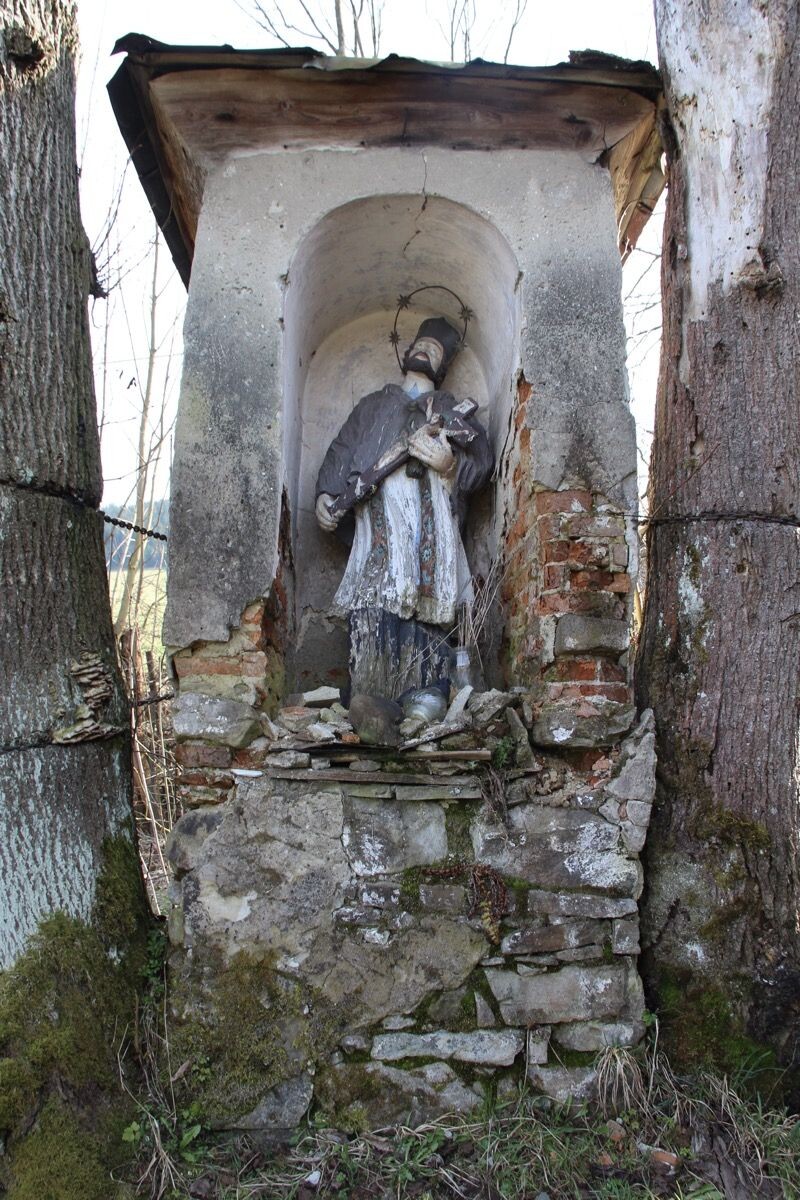
Condition of the shrine before restoration (2024–2025):
Map:
Photo Gallery: