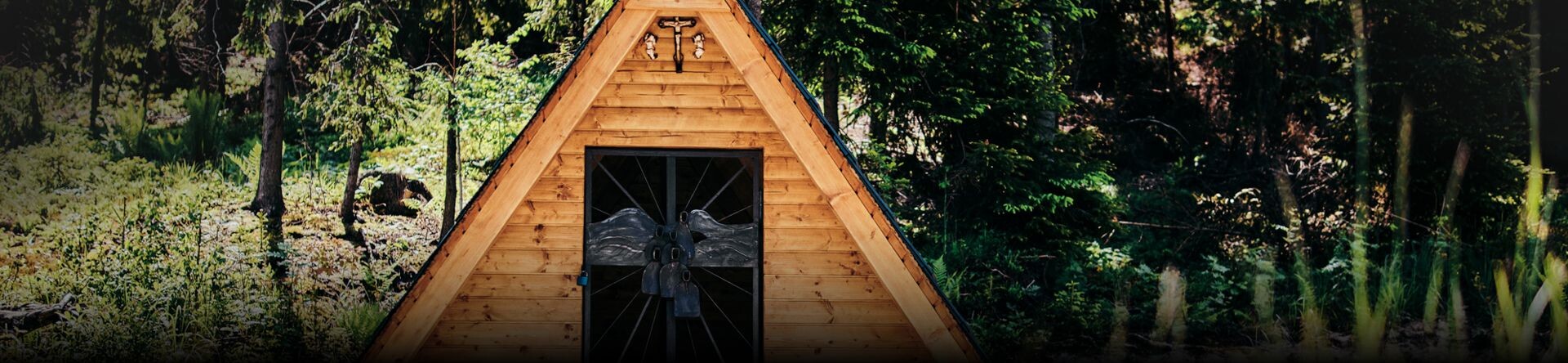
Sacred monuments in Vysoká nad Kysucou
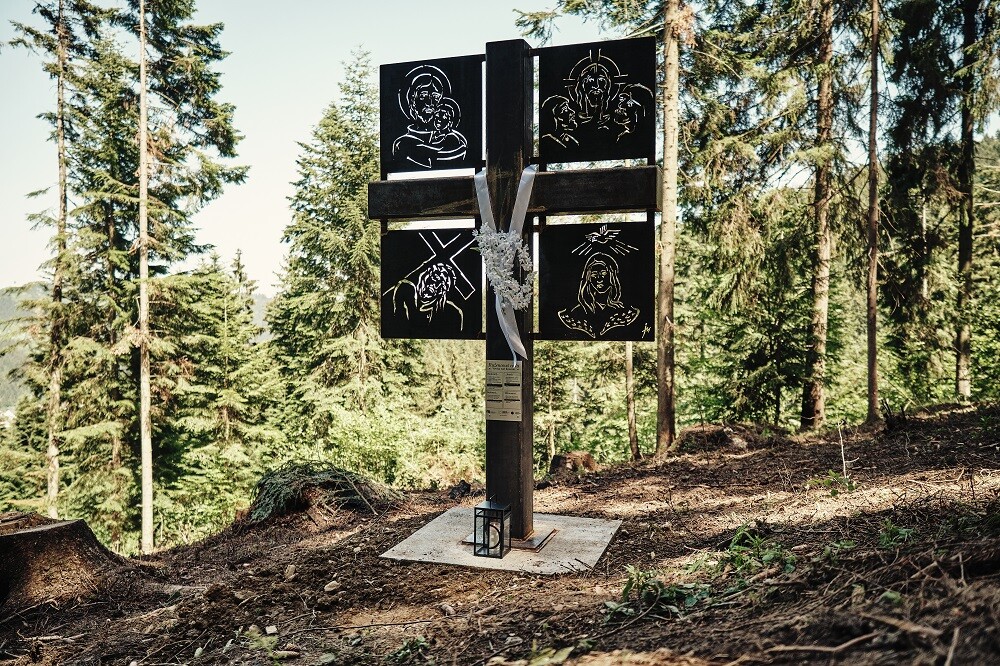
The Kysuce region is closely tied to the faith of its locals, Christian love, and humility. The Stations of the Cross line many hills in the Kysuce villages, while roadside crosses and chapels complete the overall atmosphere and natural character of the region. Perhaps this is where people find that "Divine Peace," maybe their inner strength, but undoubtedly gratitude for everything they have.
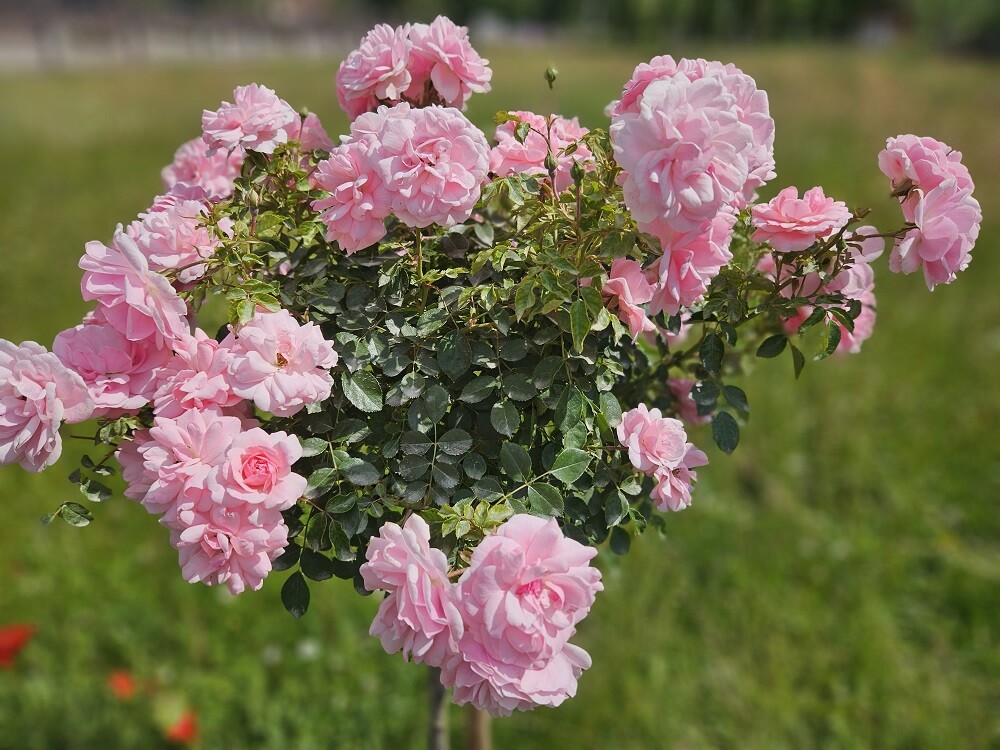
The Biblical Garden in Vysoká nad Kysucou is a unique project that combines an arboretum, rose garden, and fruit orchard. It is not only interesting and fragrant but it is also an educational place, showcasing all the plants mentioned in the Bible and other sacred texts.
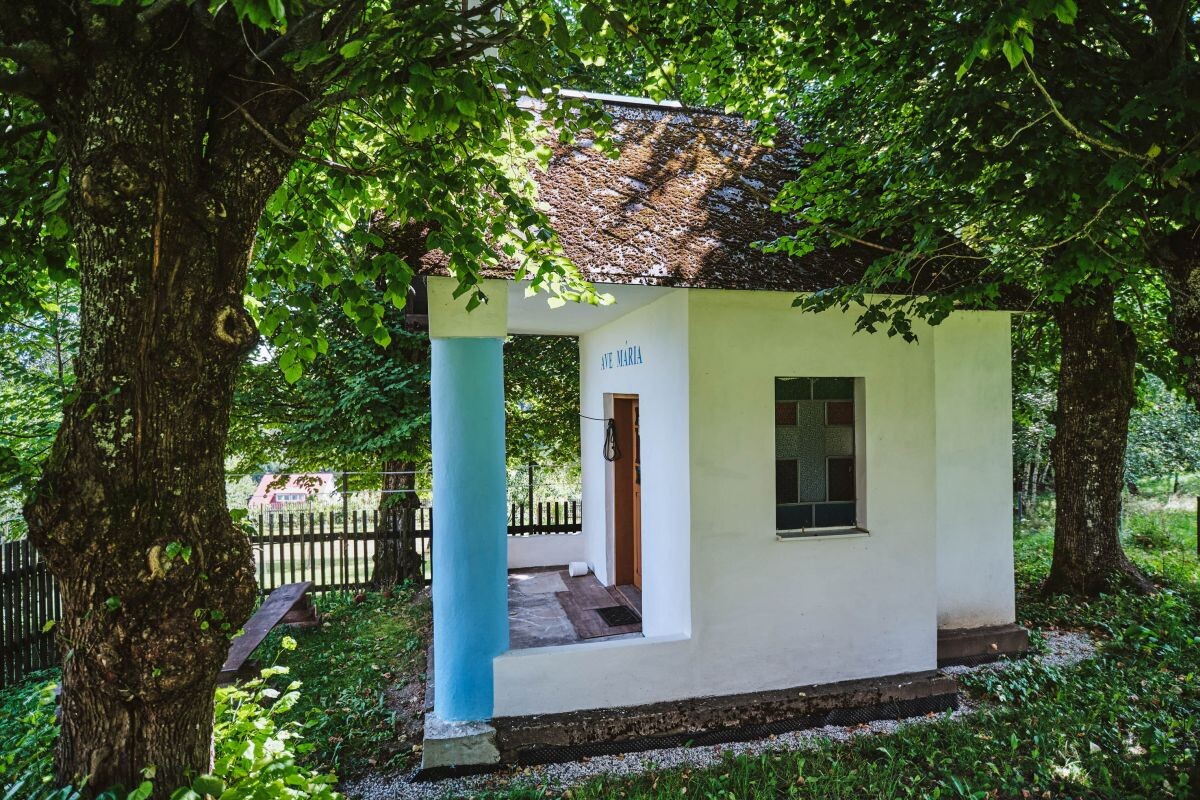
The chapel, built in 1932, is located in the settlement of Škradné and is bordered by five majestic trees. In 2024, the celebration of Holy Mass was renewed here after 28 years.
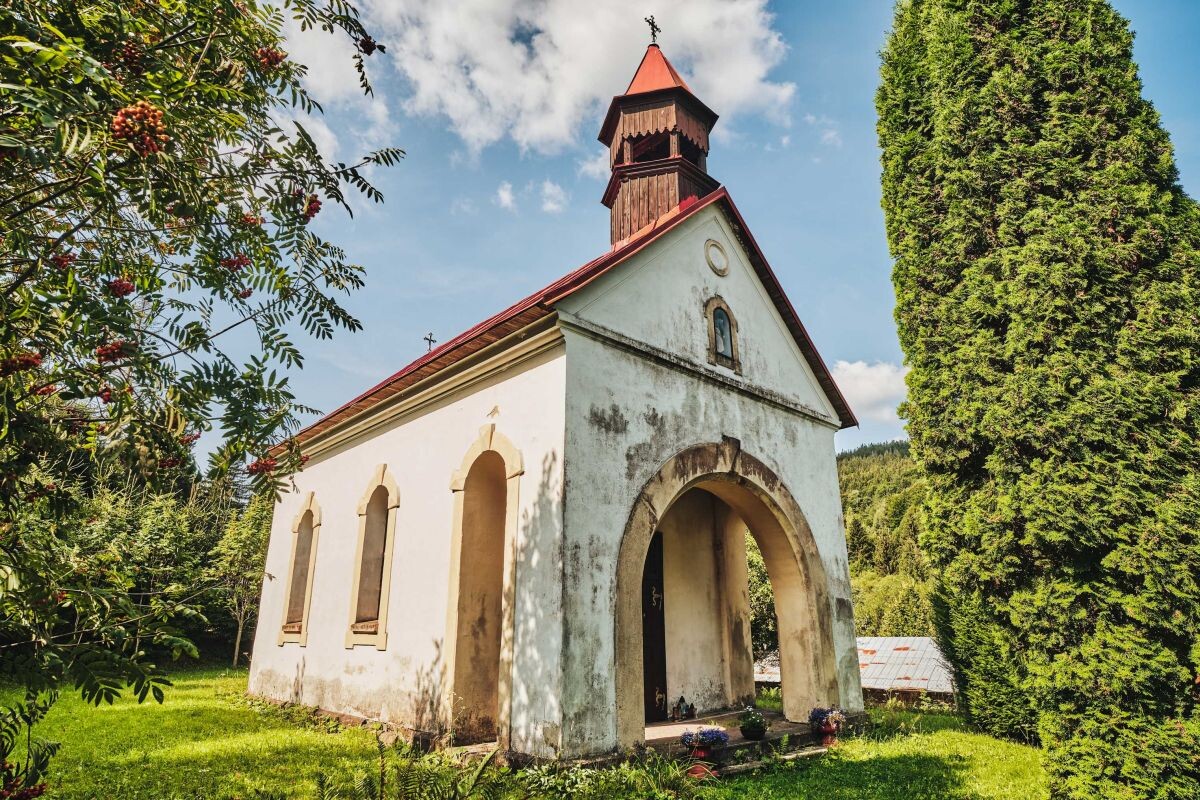
Jozef Krutošík had the chapel built as a thank you for the healing of his wife. The chapel is located in the settlement of Jedľovník.
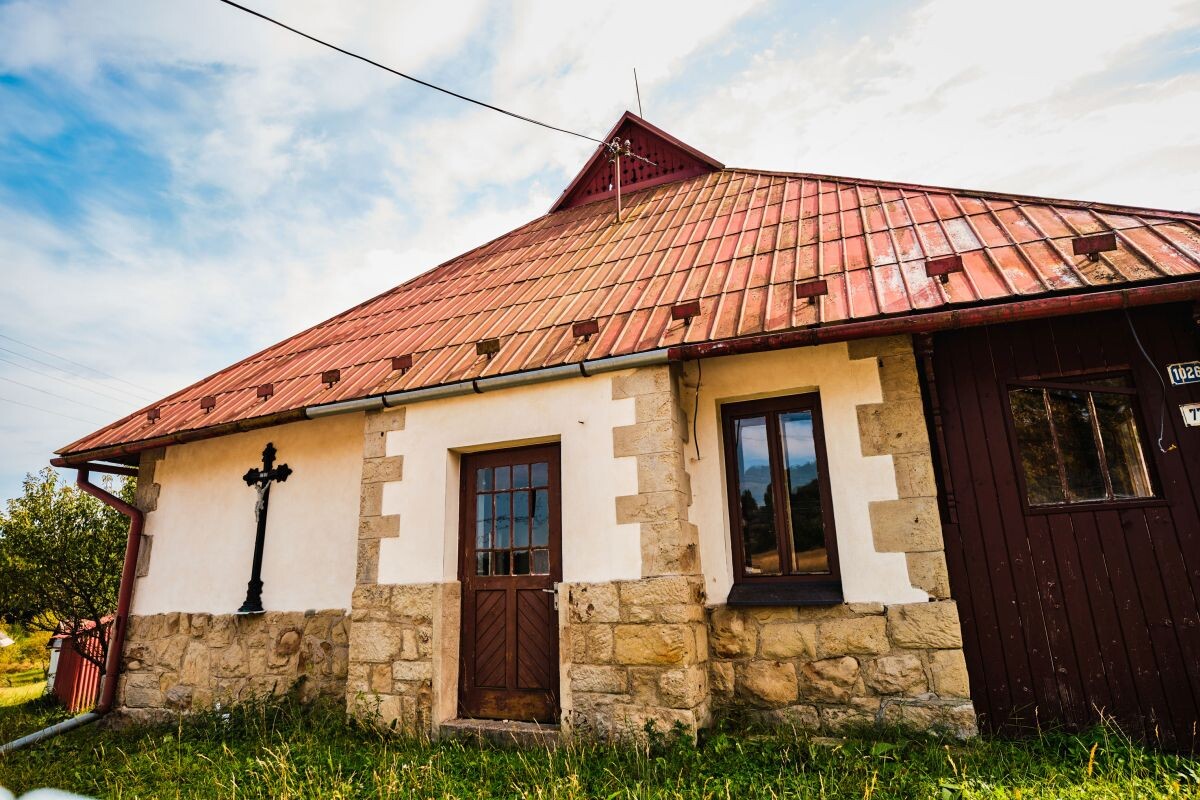
The building was constructed as a school in 1913. When it ceased to serve its original purpose, a memorial room was established for the victims of the Semeteš tragedy. The chapel was founded in 2015.
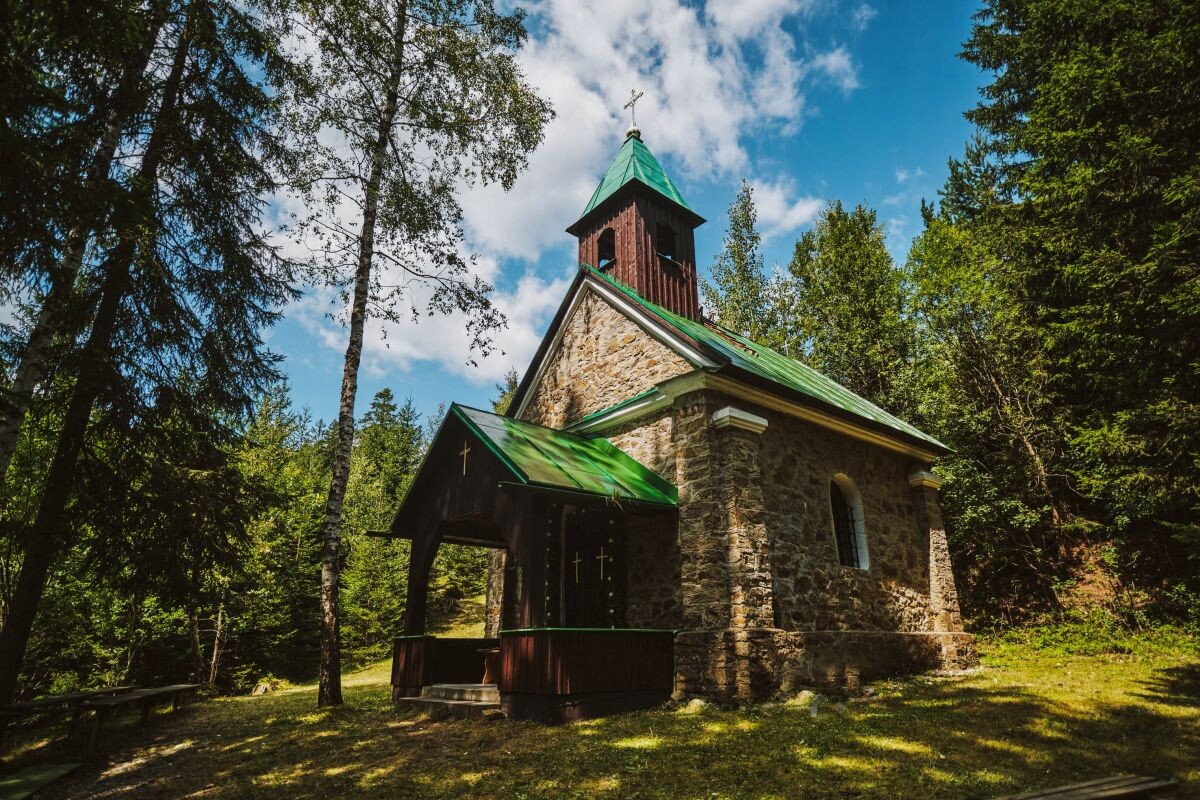
The chapel is associated with a story about the apparition of Saint Anne to a 12-year-old girl. On September 18, 1764, the case of the alleged apparition was discussed at the congregation of the Bytča deanery in Predmier near Bytča, where it was revealed that it was a fabrication.
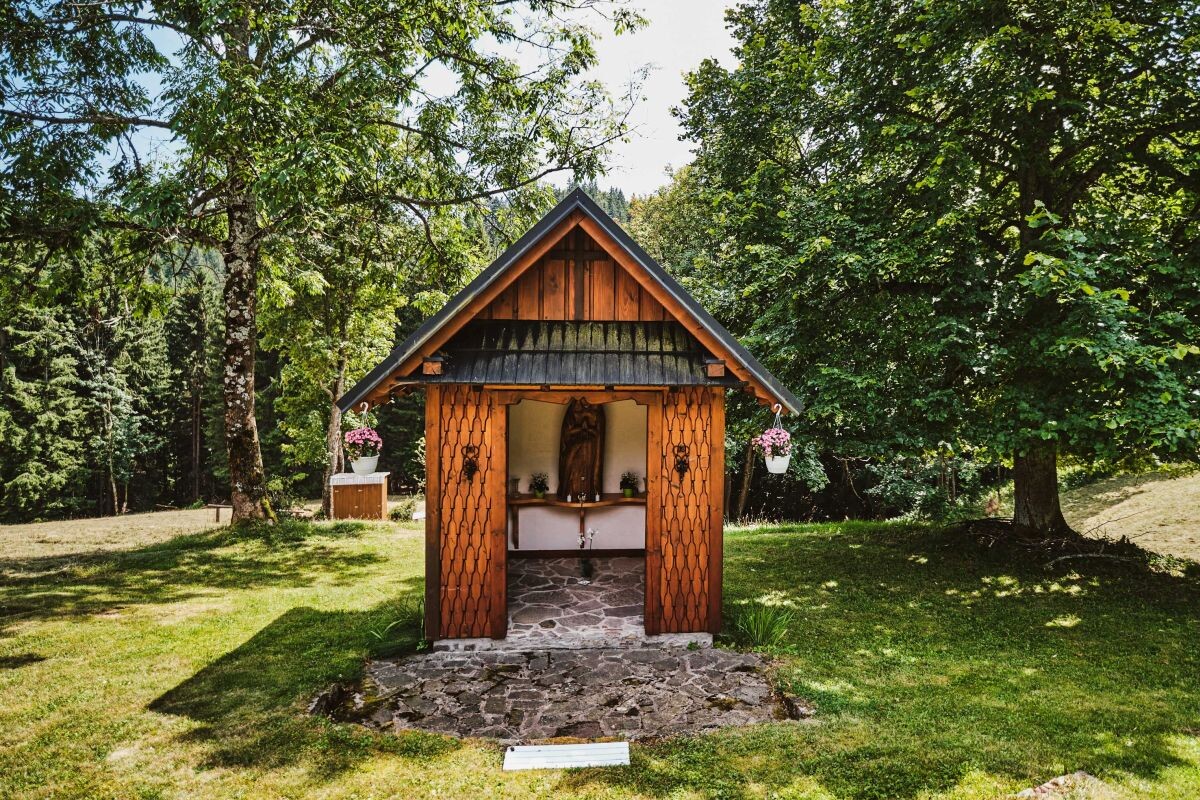
The chapel, converted from an agricultural building, is located in the settlement of Huslov and can only be accessed on foot or by off-road vehicle via a forest road from the Vršok area, where a Stations of the Cross has been established since 2017.
The chapel is situated in the settlement of Huslov and can only be accessed on foot or by an off-road vehicle via a forest road from the Vršok area, where a Way of the Cross has been leading since 2017.

The chapel was commissioned by Anna Drábiková, born Šurláková, who is originally from this settlement, in memory of her parents for their kindness and upbringing in 1965.
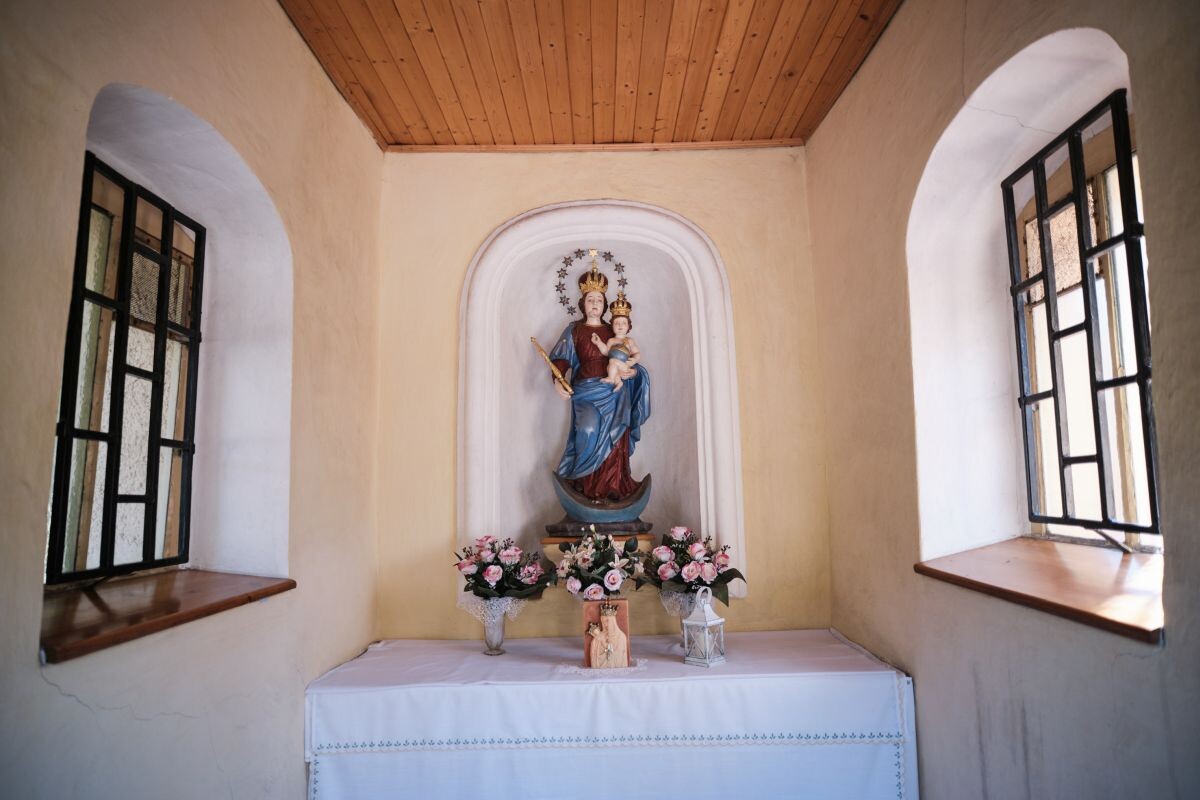
The chapel, built in 1776, is located by the main road in the center of the village. According to historical records, the doors of the chapel were rarely closed, allowing the faithful to enter at any time to pay their respects to the Virgin Mary.
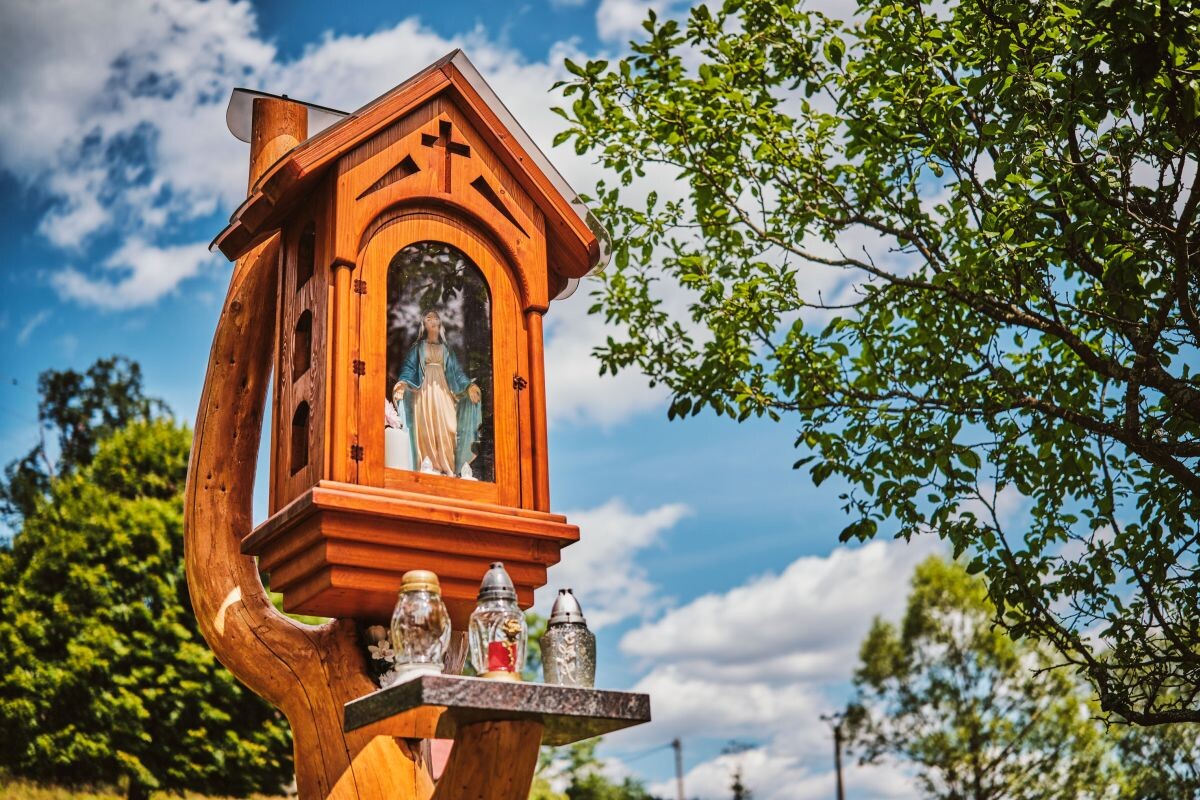
Originally, the shrine consisted of a wooden box with a gabled roof, mounted on a wooden post. The box was painted dark brown, with a tin roof featuring a serrated edge.
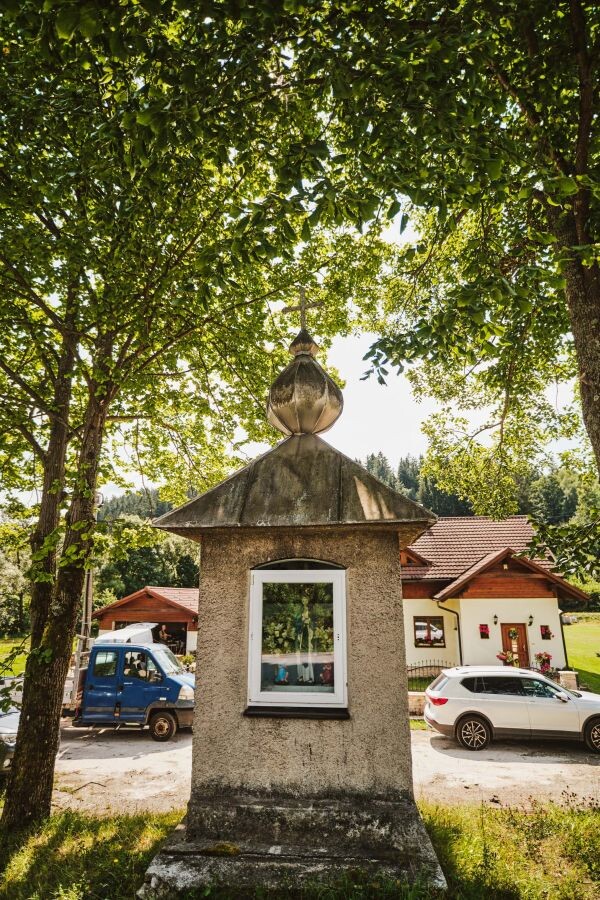
This was originally a wayside shrine built above an old road (parts of which are still visible). Seven stone steps led from the road to the shrine, and about 3-4 meters to the left, seven wooden steps were later added (they seem to be made of railway sleepers).
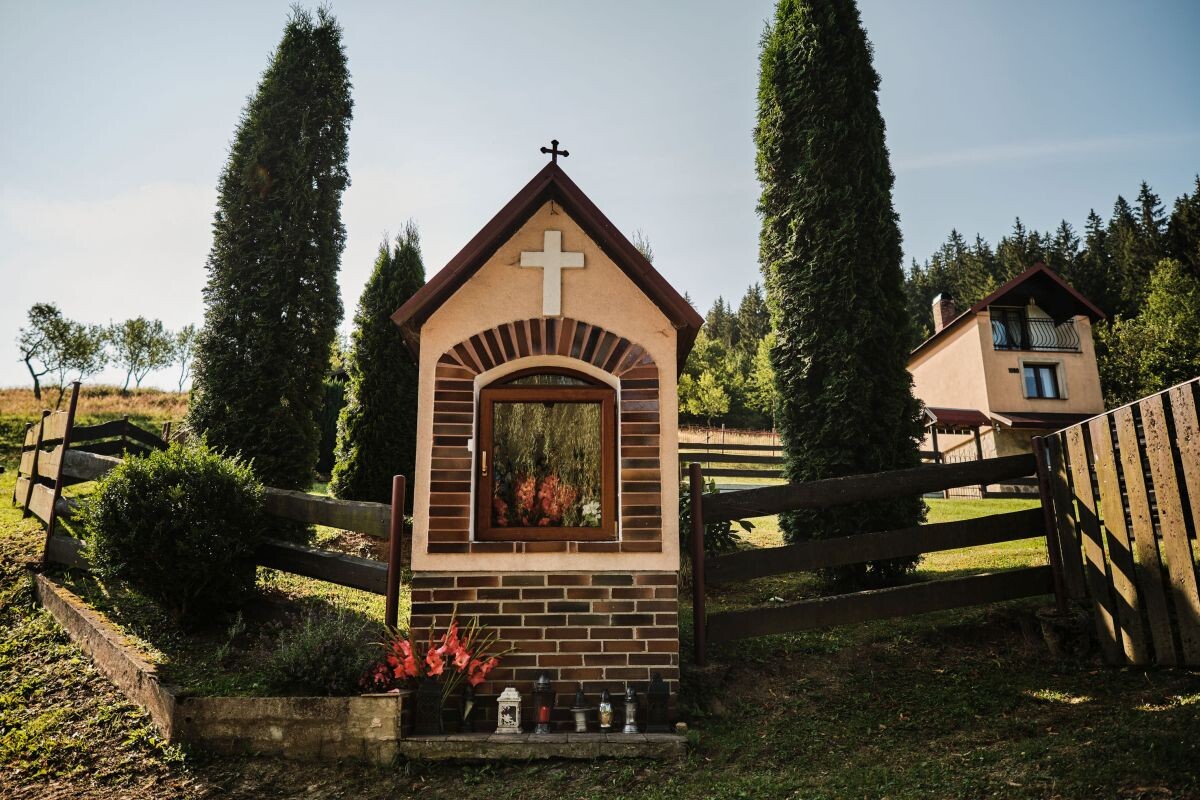
The original wayside shrine was made of stone and built just above road no. 541 on the left side in the direction from Turzovka to Bytča. Today, a willow and rowan tree grow at the original location.
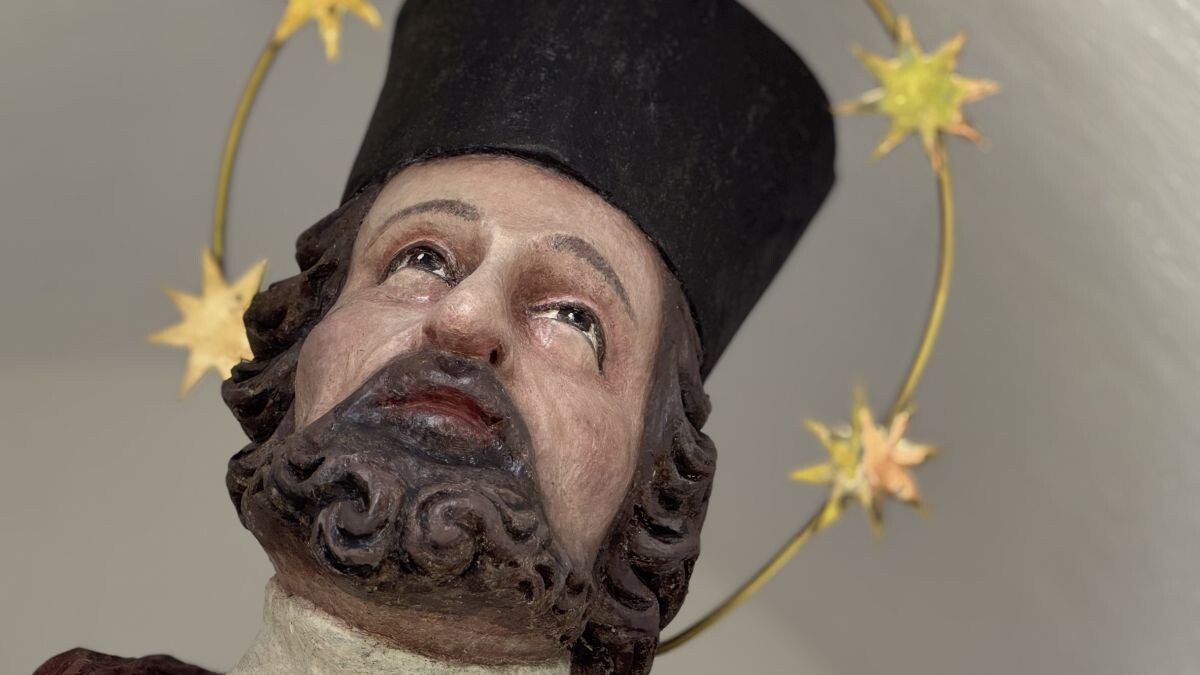
The pillar shrine is already marked on the Second Military Mapping from 1824. It is more than 200 years old, with a square base, prismatic shape, and a pyramid-shaped roof.
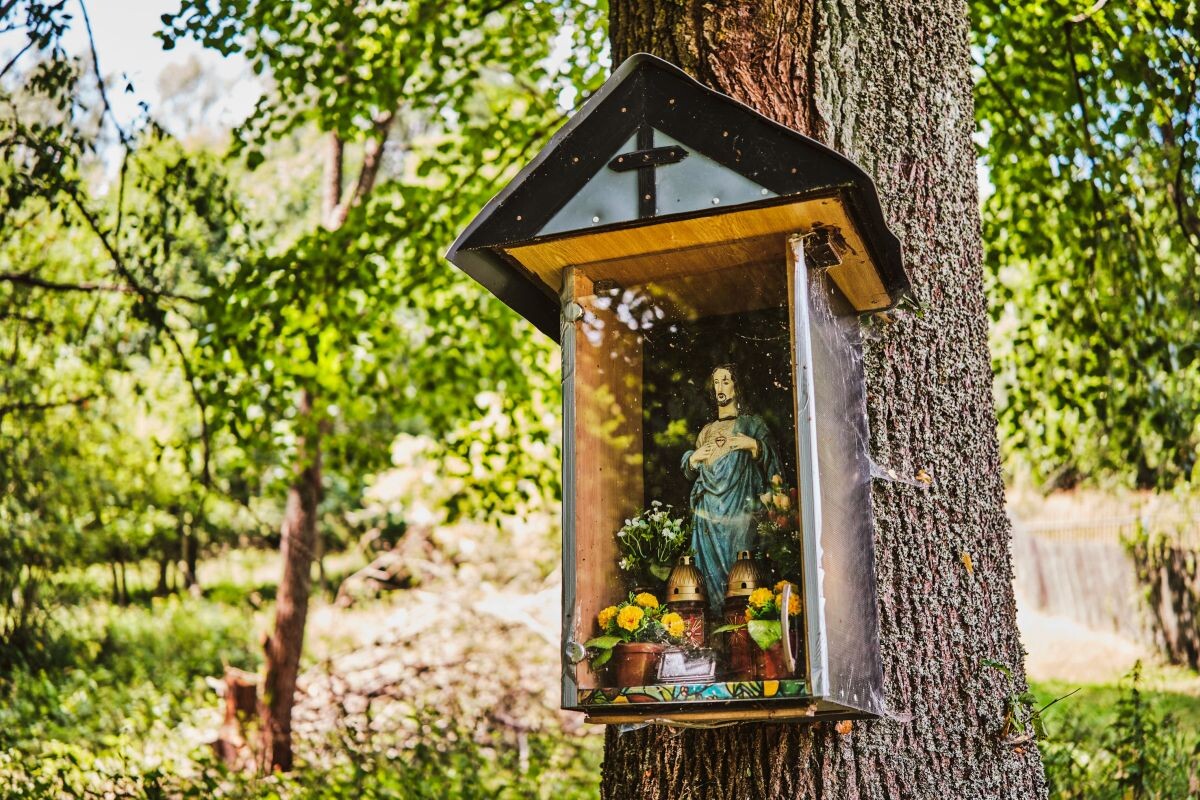
Before 2021, the shrine was a wooden, green-painted cabinet, prismatic in shape with a gabled roof and glass-paneled doors at the front. The roof gable was white, and at the top, a small white cross "grew" from it.
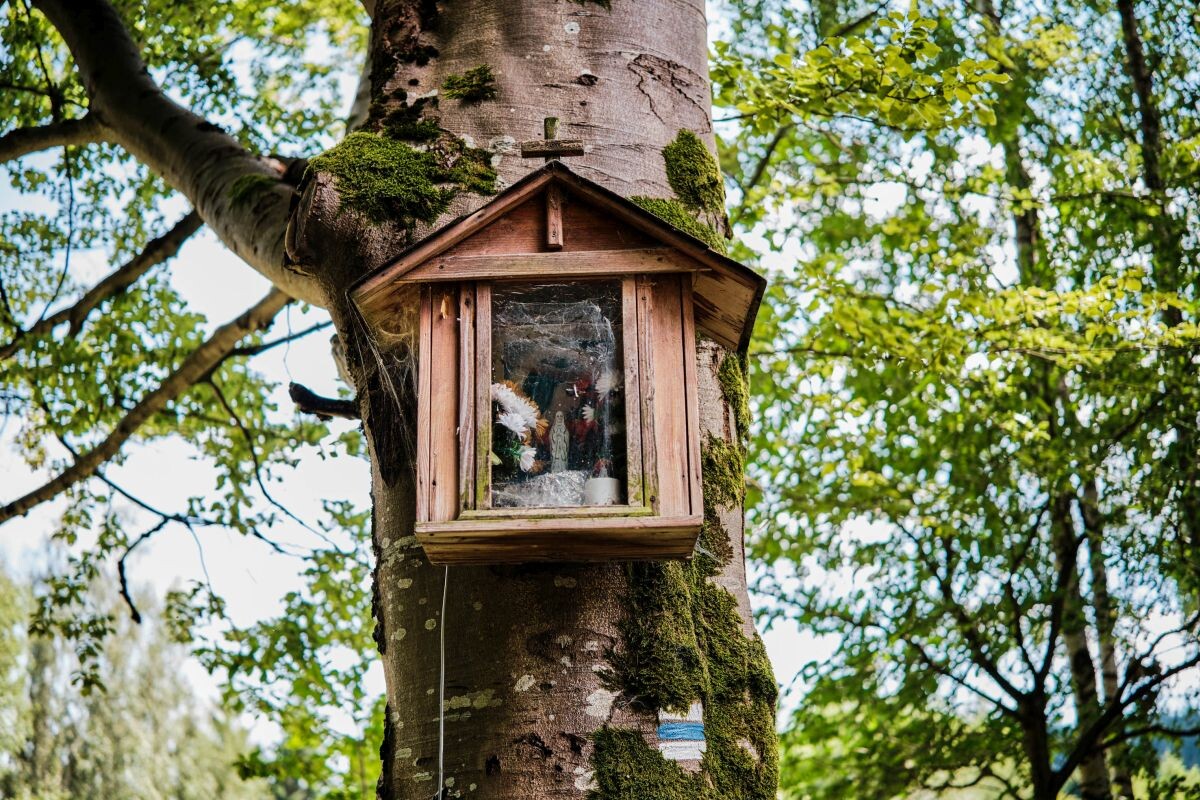
Wooden cabinet with glass-paneled door at the front. Inside, there is an image of the Virgin Mary along with a small statue of her.
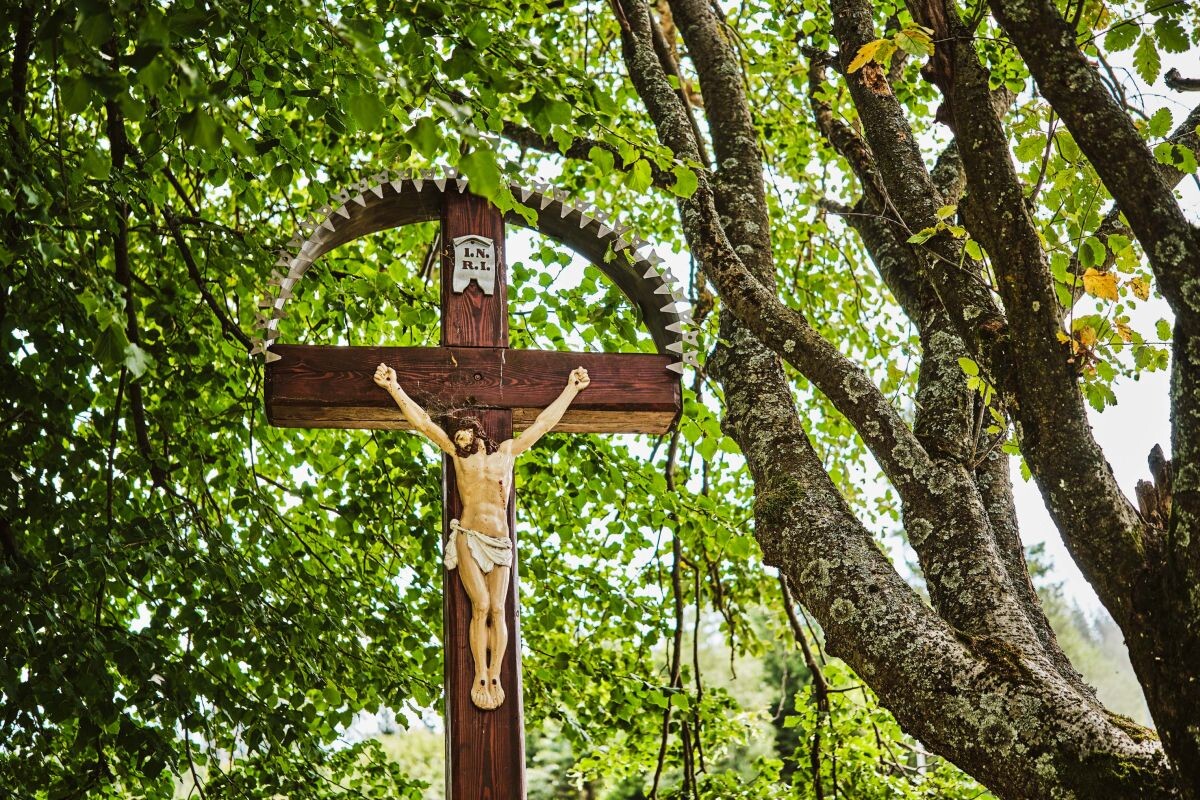
The cross is located in the Príslop area between two deciduous trees on a small rise to the right above the road leading to the Zátoka part and the settlements U Masnicov and U Kubalov.
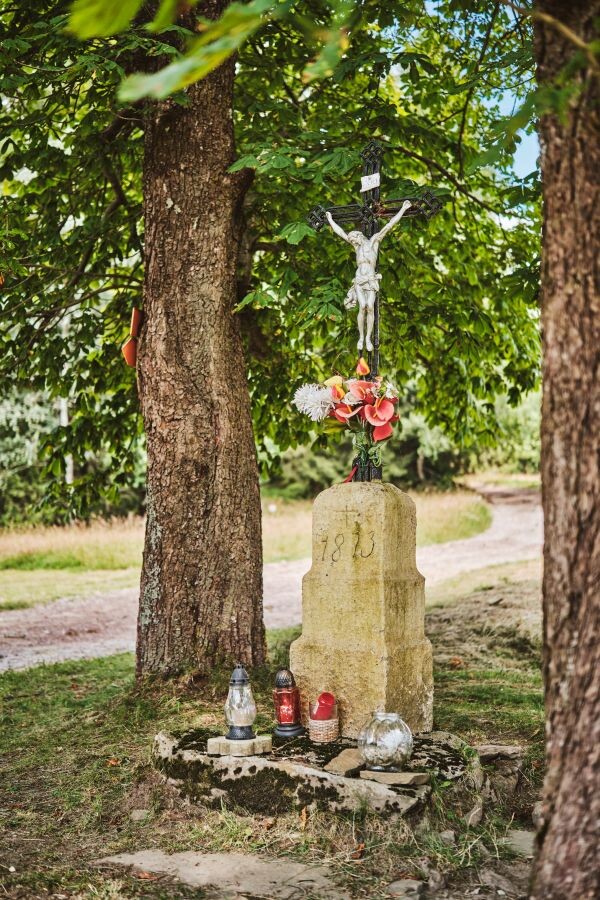
The cross consists of a stone pedestal (sandstone was used) and a cast iron cross. The pedestal is made up of three almost square blocks placed on top of each other (from the largest at the bottom to the smallest at the top).
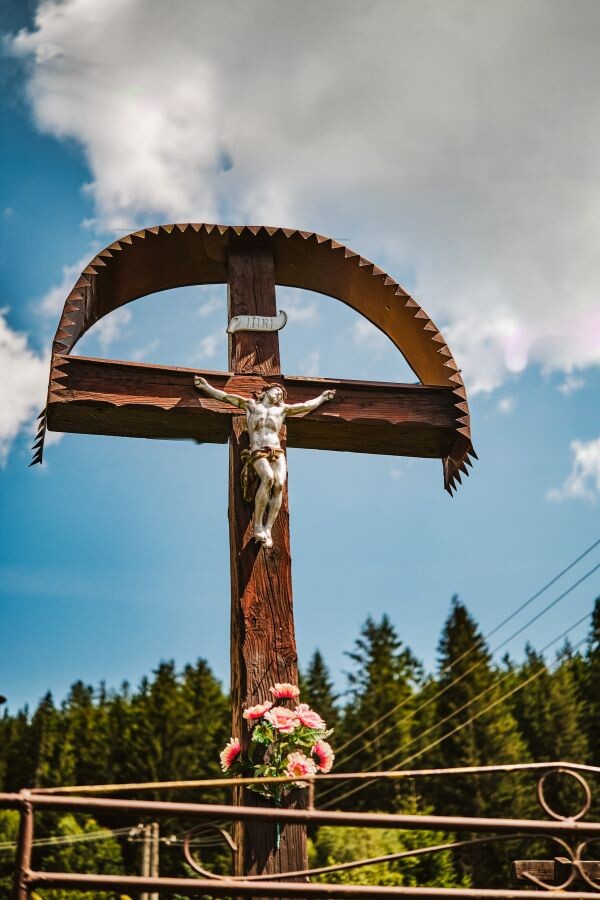
The wooden cross has a tin roof with a serrated edge above the transverse beam, painted dark brown on the upper side. The Corpus of the Crucified is made of cast iron, painted silver, while the cloth around Christ's loins is brown, as is the crown of thorns on His head.
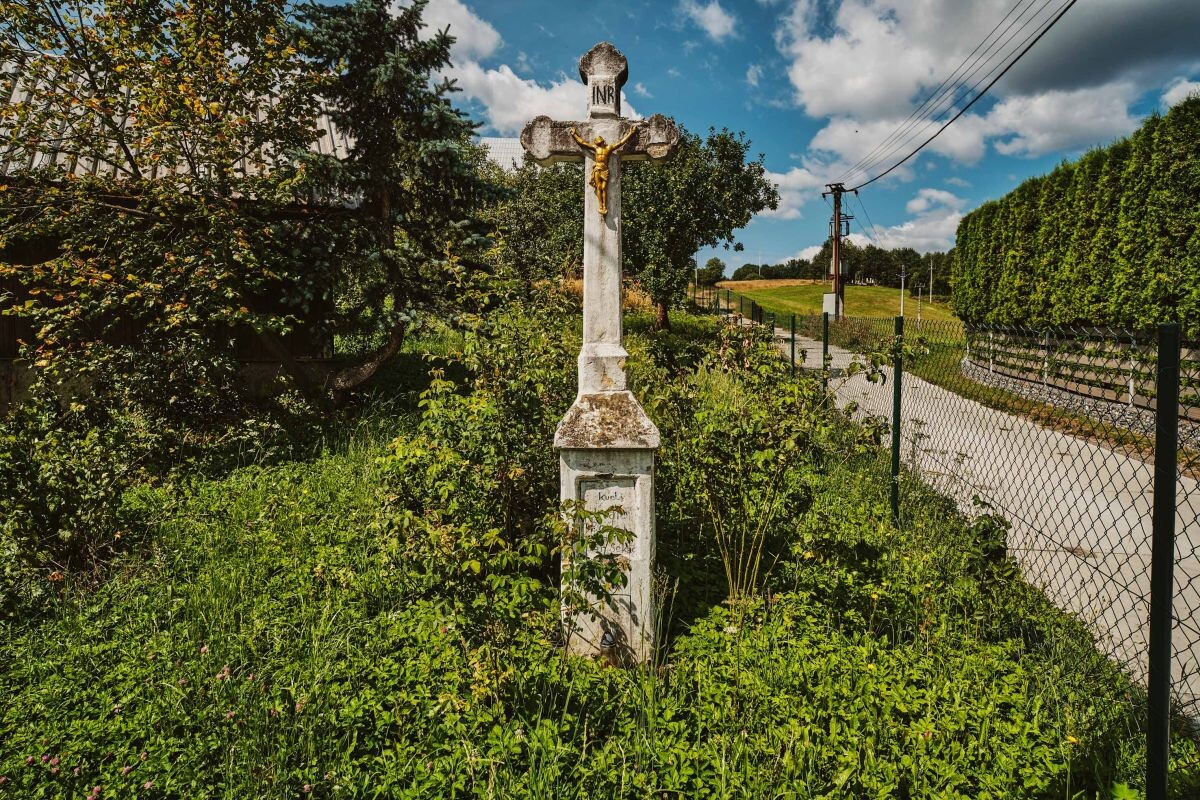
The stone cross, possibly sandstone, is plastered and painted with lime, featuring trefoil-shaped ends on the beams.
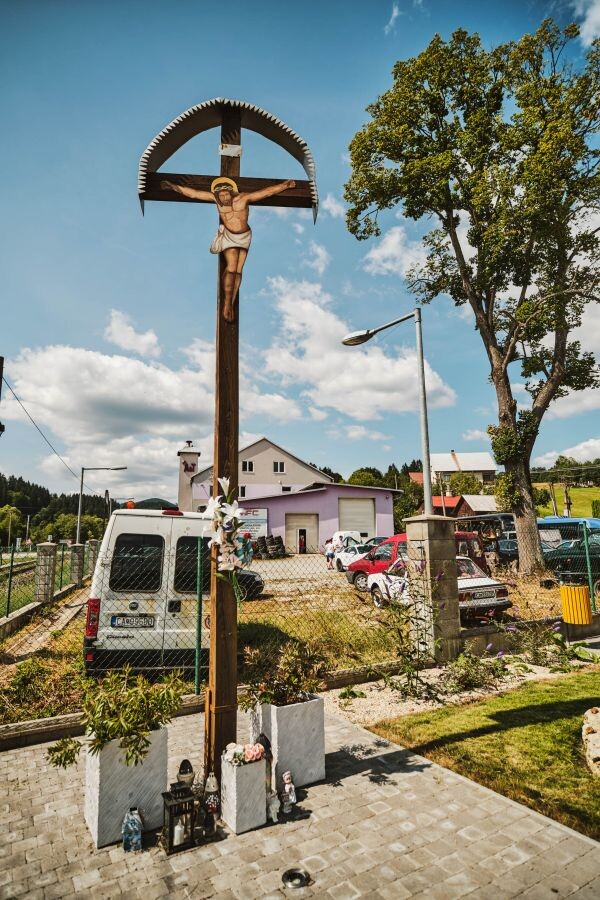
A recently renovated wooden cross, painted dark brown. Above the crossbeam is a metal roof with a serrated front edge. The corpus is painted on metal, with a natural skin tone.
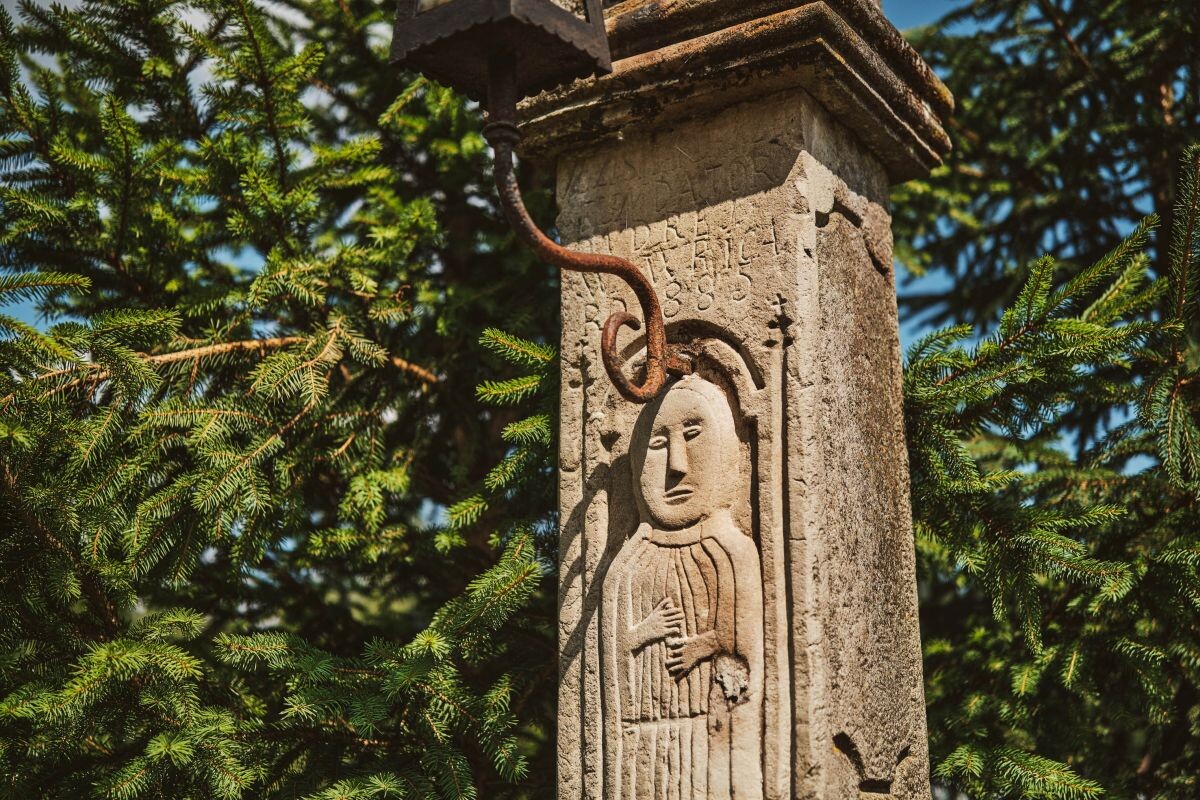
A stone (sandstone) cross standing on a two-part base, placed on two stone slabs. The transverse and top beams of the cross have trefoil ends, with each "leaf" containing a floral motif in the shape of an eight-pointed rosette.
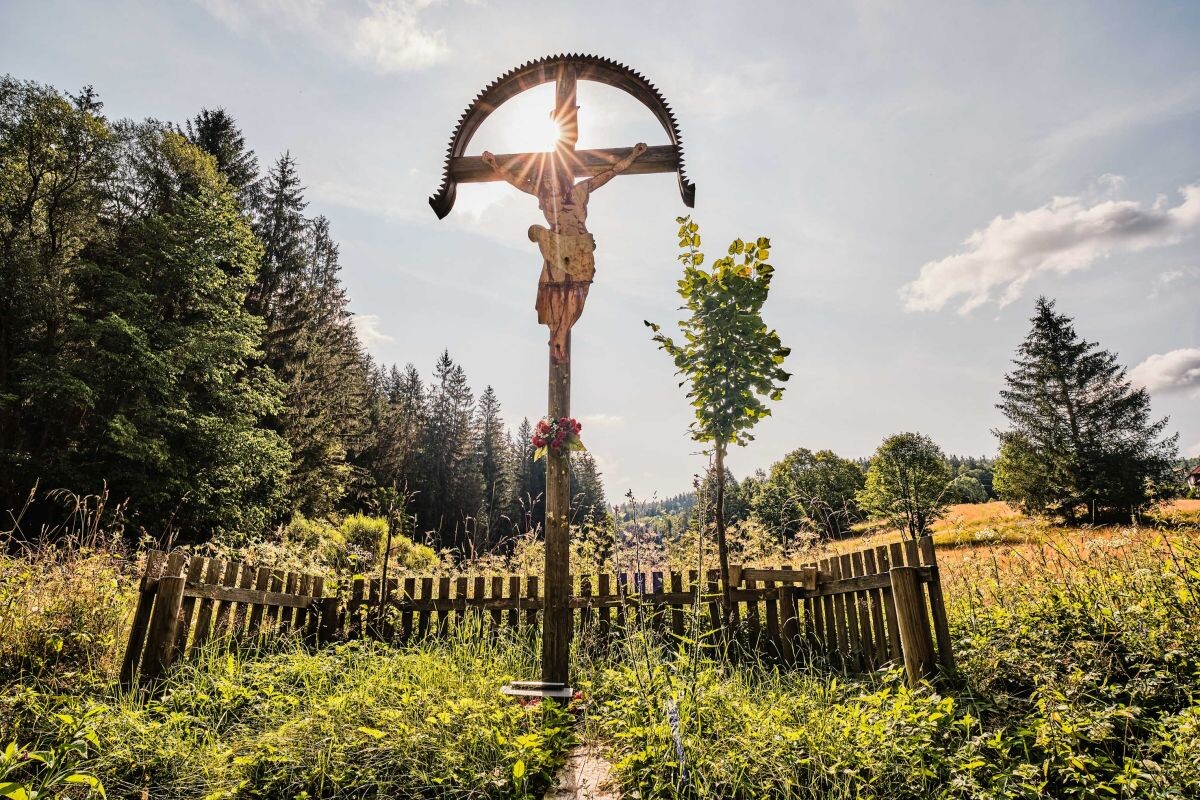
Wooden cross, originally painted white (only small fragments of the white paint are still visible, giving the cross its name. However, in 1903 it was already recorded that the cross was located in the area known as “White Cross,” suggesting that there was likely a previous cross here that gave the location its name).
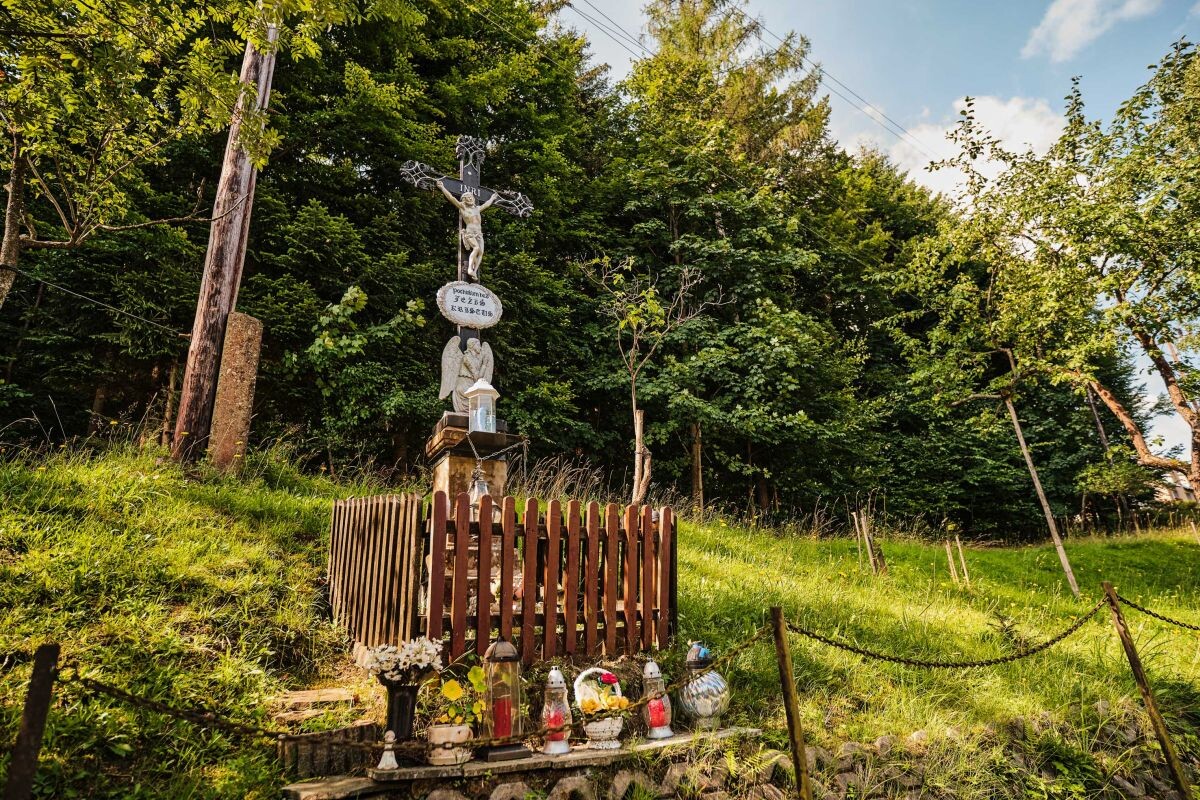
The cast iron cross is painted black, with ornately finished arms, mounted on a sandstone pedestal. At the base of the cross is a cast iron sculpture of a kneeling angel..
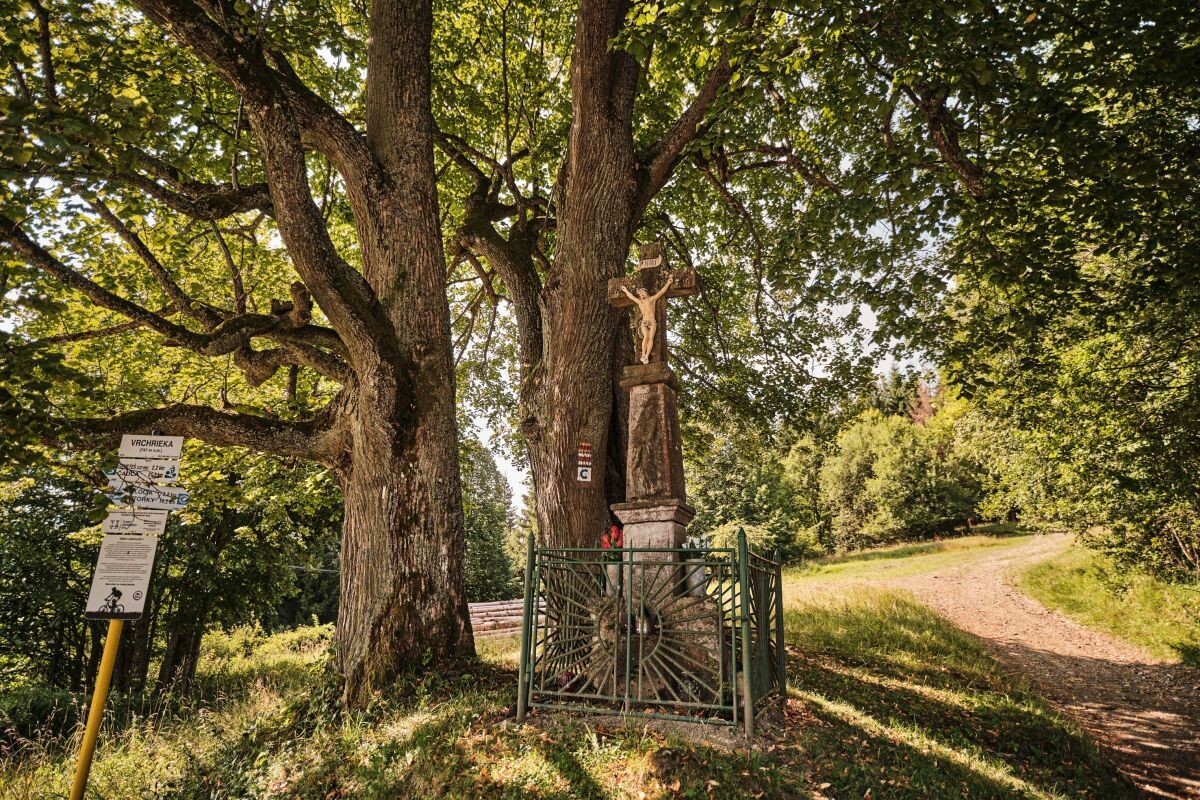
The oldest cross in Vysoká nad Kysucou, and probably the oldest in the entire Kysuce region. It is a fairly simple cross on two stone pedestals, which are very skillfully crafted. The lower pedestal has two inscriptions engraved on it – the year of construction (1760) and the year of a later, probably the first, renovation.
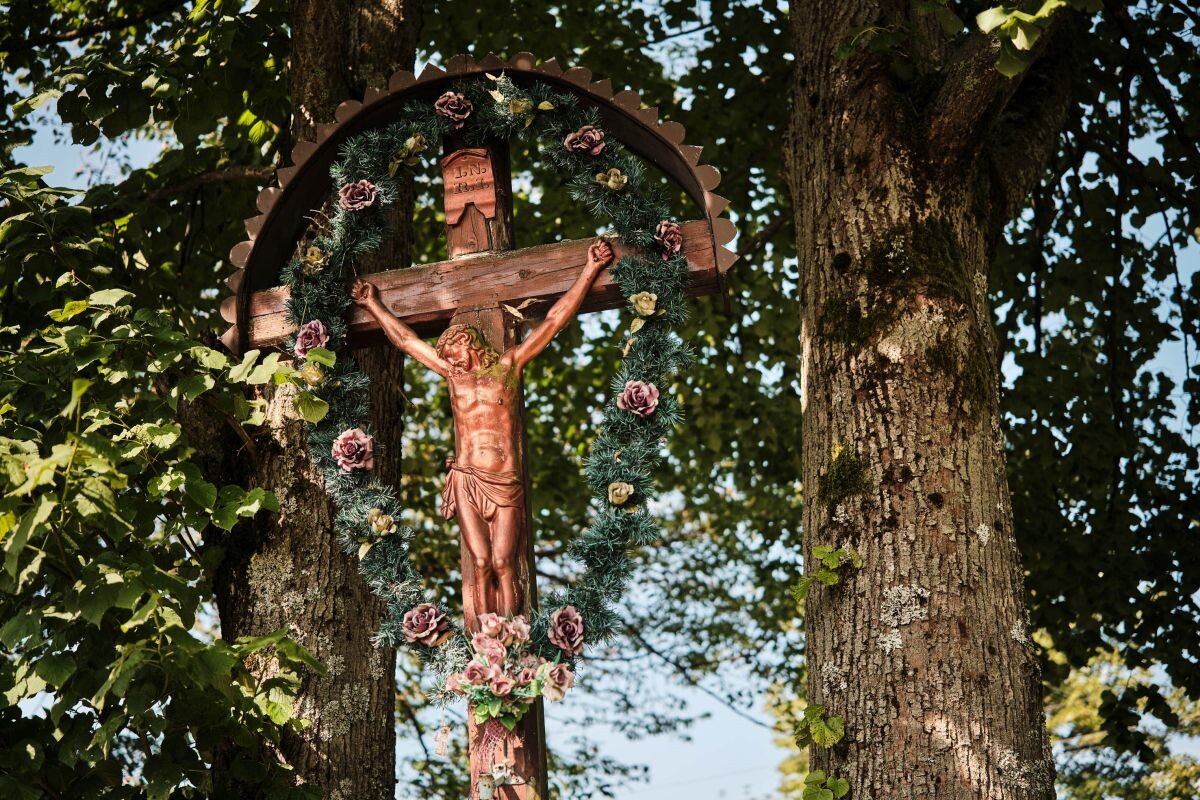
A wooden cross painted with a brown coating that has a reddish tint. The crossbeam is protected by a metal roof with a decorative front edge, coated in brown paint.
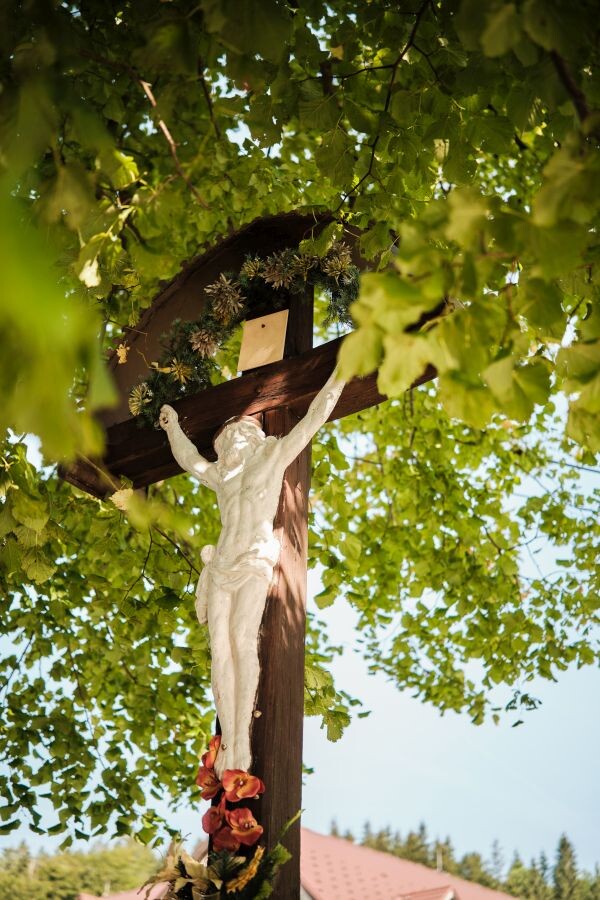
A wooden cross painted brown. The crossbeam is protected by a metal roof with a decorative front edge, coated in brown paint, slightly curved outwards at the ends.
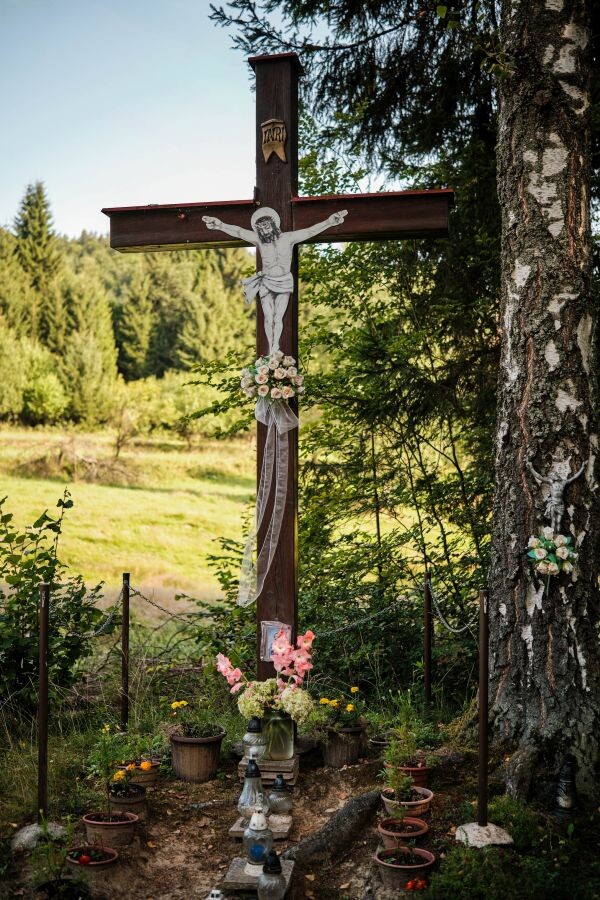
The original wooden cross was erected in memory of three men who were shot during the so-called Semeteš tragedy on April 20, 1945. Jozef Cipka and brothers Jozef and Štefan Kaduch were shot by Vlasov army soldiers directly in the settlement of Ovčovce.
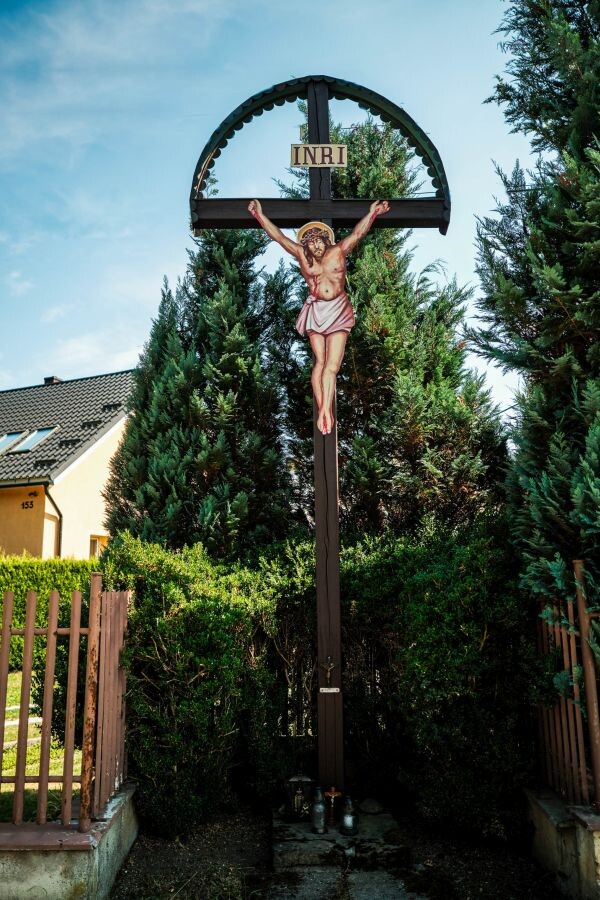
In January 2007, heavy snowfall broke the original cross, which was originally erected by Jaroslav Matejov’s father. Jaroslav Matejov took on the patronage for constructing the current cross, with financial contributions from local neighbors.
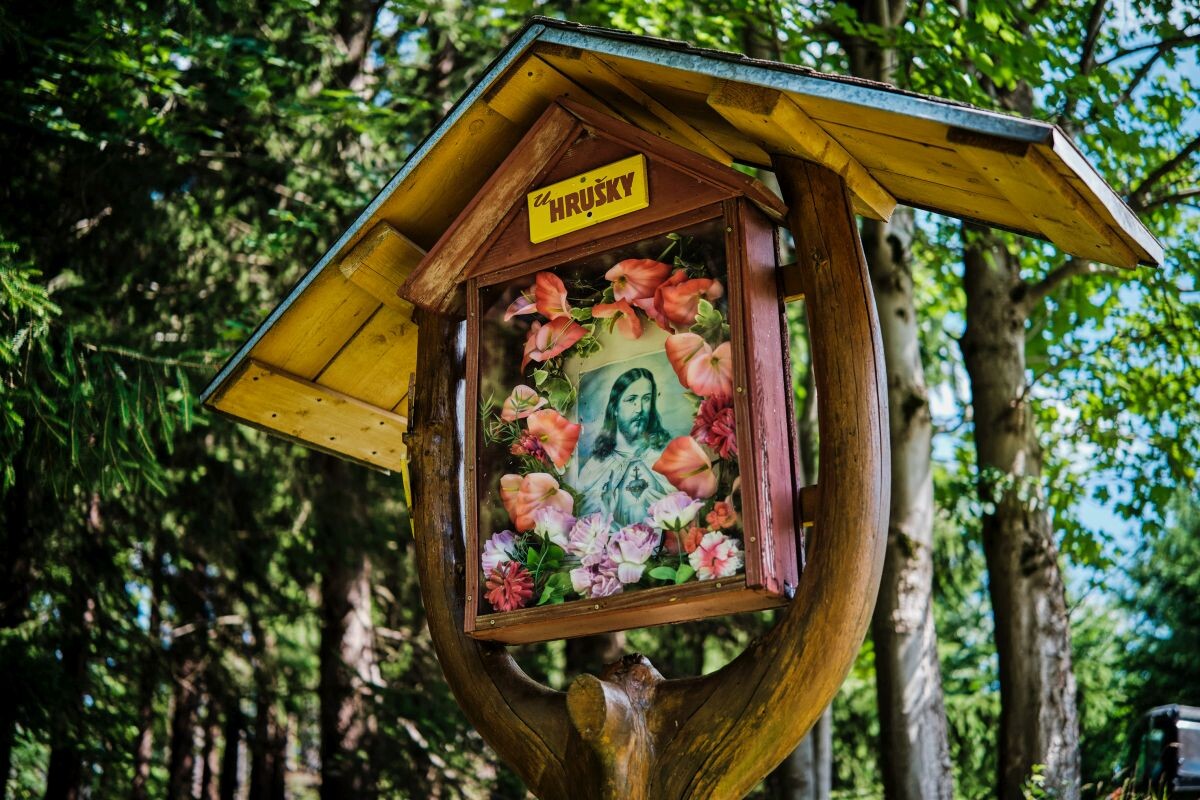
The wooden box with a glass door at the front was originally situated on a tree—a pear tree, hence the local name "U hrušky." (“At a pear tree”).
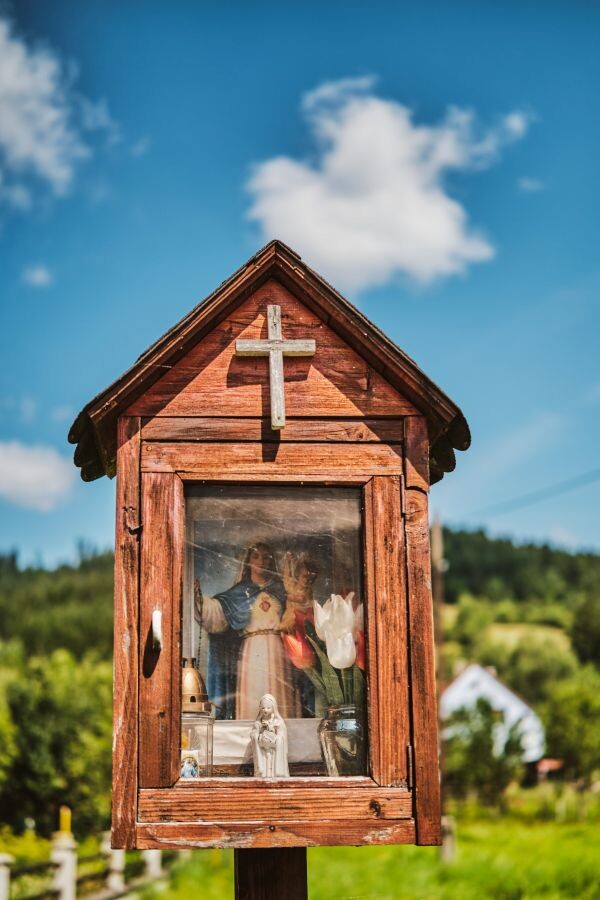
A wooden cabinet with glass-paneled doors at the front, mounted on a wooden post that serves as a stand. Both the cabinet and the post are painted brown.
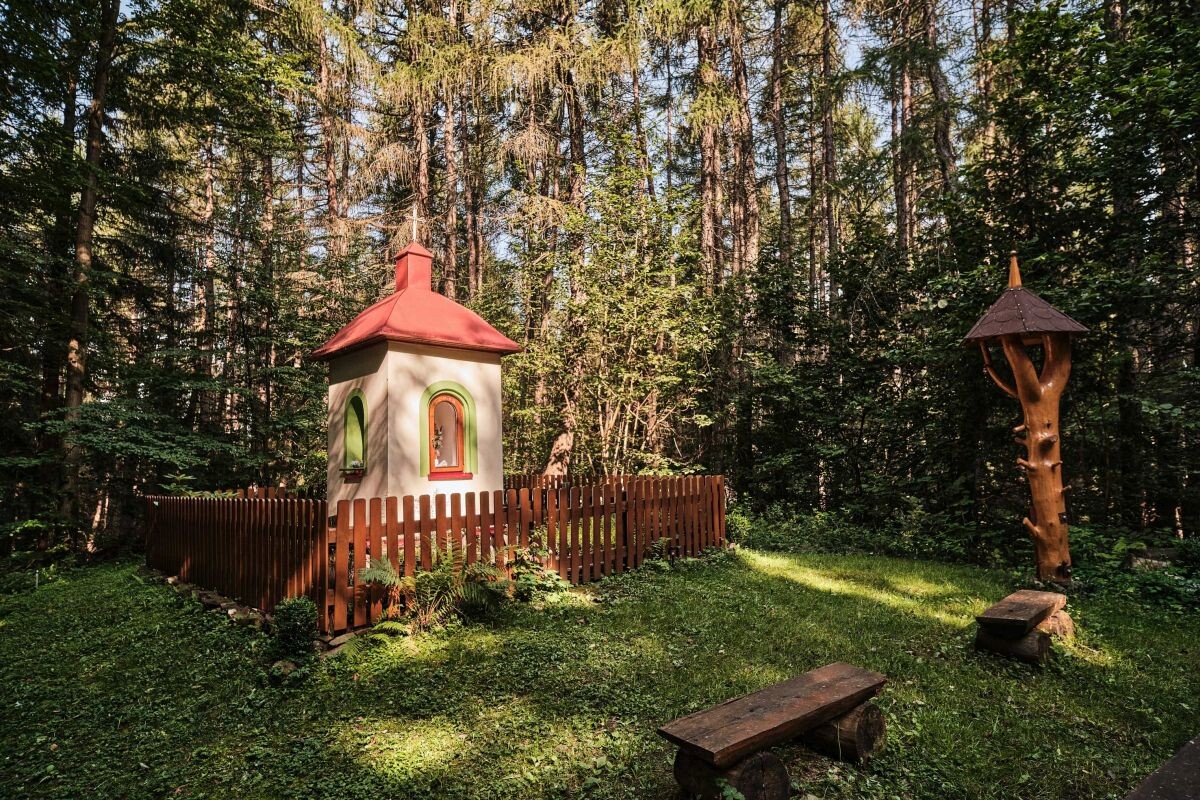
The wayside shrine is already marked on the 2nd military mapping. It is a shrine with an almost square layout in the shape of a prism with a pyramidal roof, topped with a small turret with a metal cross at the top.
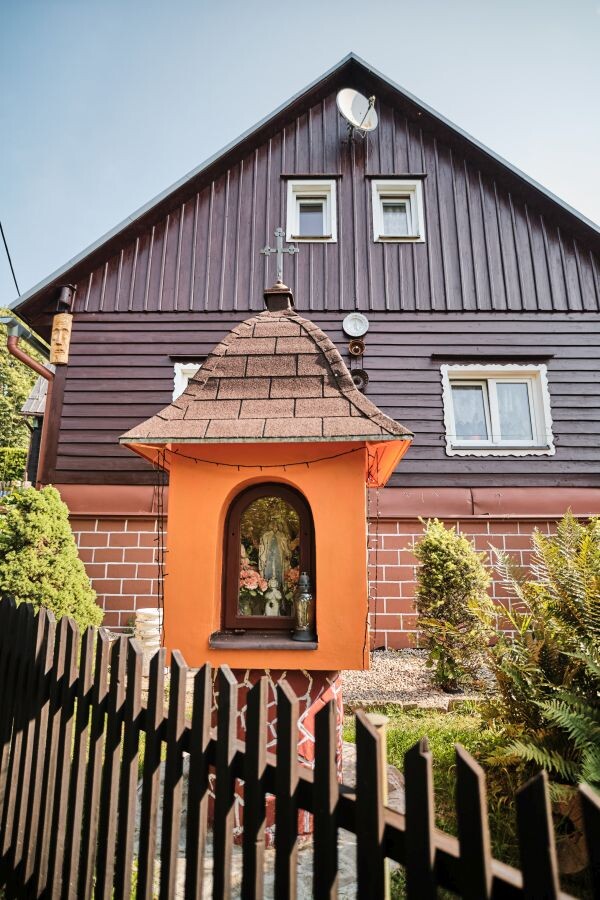
A rectangular block with a niche sits atop a cylindrical stone pedestal, topped by a helmet-shaped roof ending with a metal Latin trefoil cross. The roof is covered with burgundy asphalt shingles.
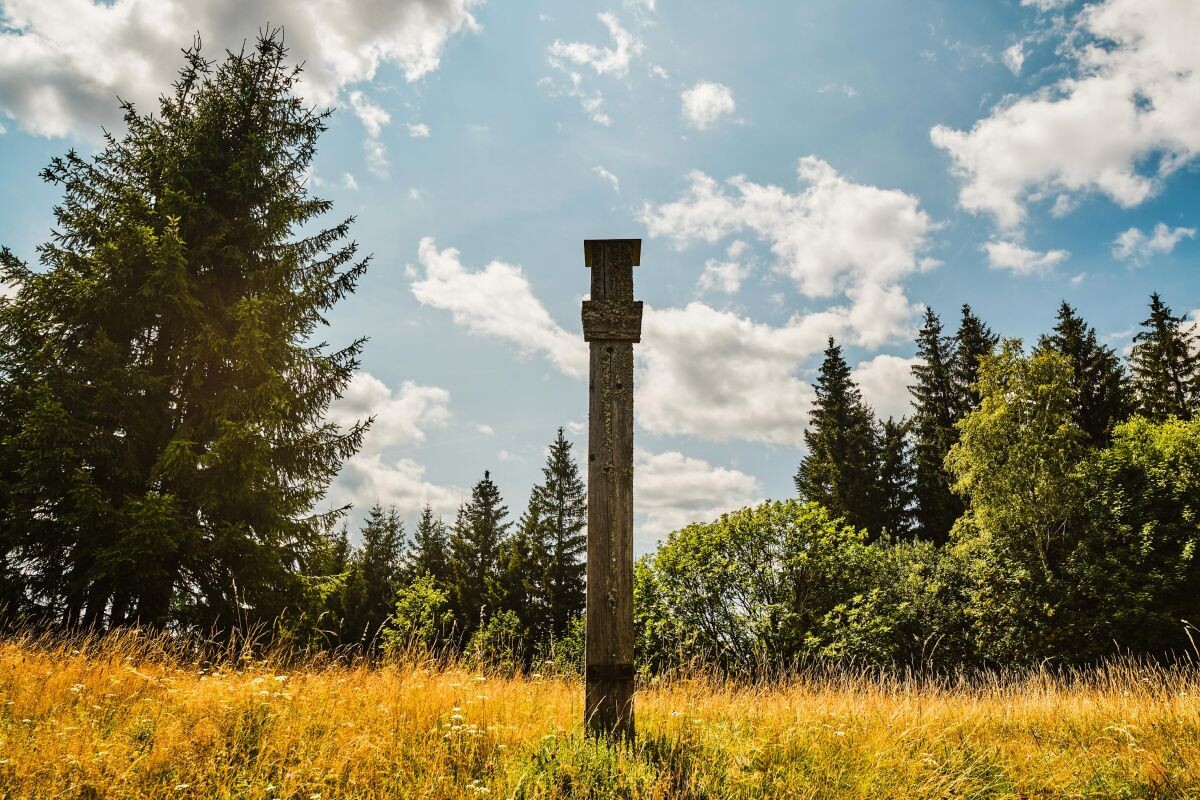
A wooden beam that can hardly be called a cross, as it has a minimal crossbeam.
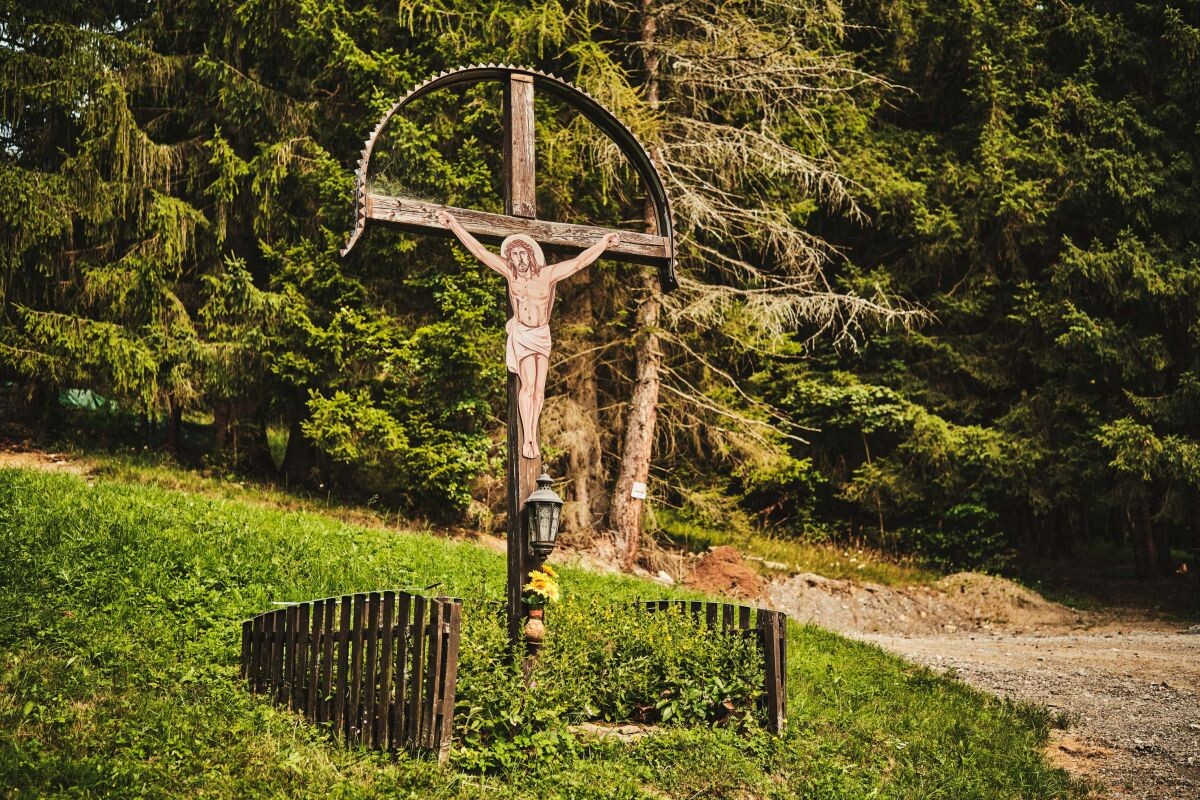
A wooden cross painted brown, significantly weathered by the elements. The crossbeam is protected by a semi-arched metal roof with a serrated edge on both sides and it is slightly turned up outwards at the ends.
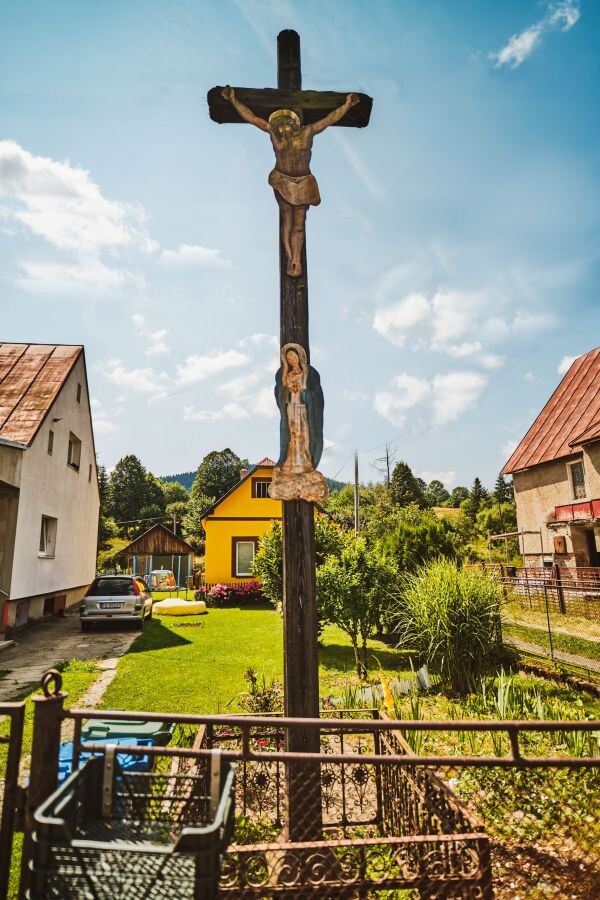
A wooden cross painted brown, with a somewhat unusual design. The beam ends are rounded, and the crossbeam is unusually short compared to the vertical beam's height.
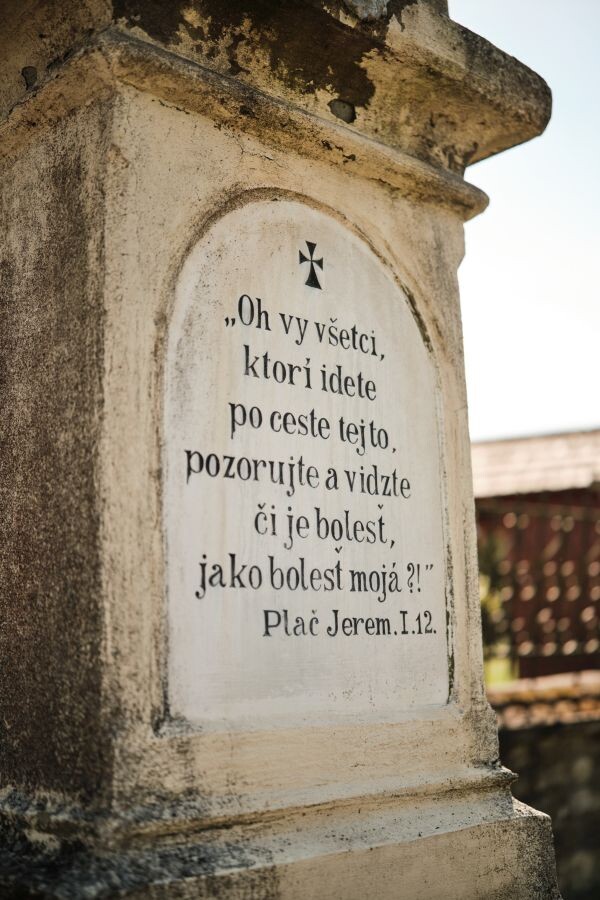
KA stone cross located in front of the parish church, composed of a three-tier stone base, a divided pedestal, and the cross itself. In the lower part of the pedestal is a stone panel with the inscription.
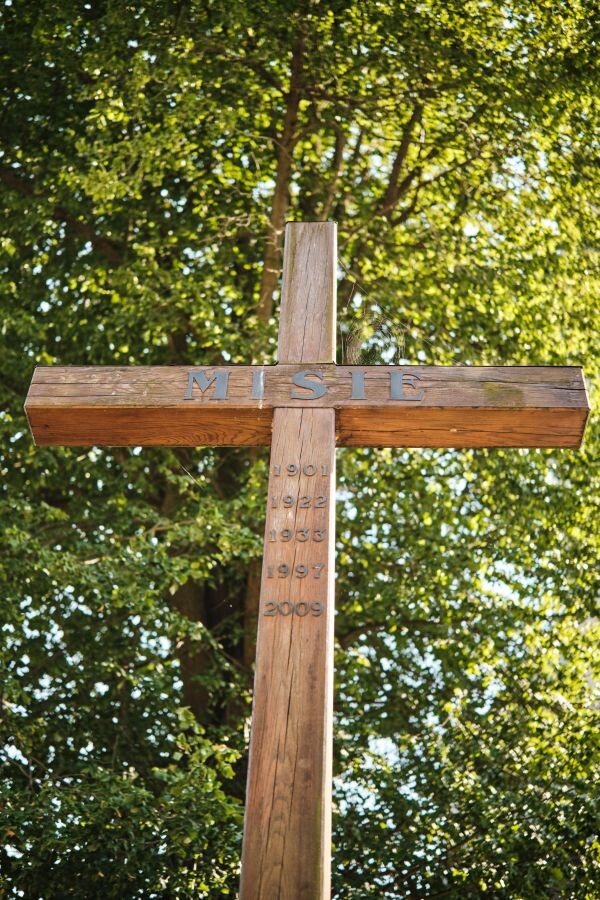
A wooden cross, reportedly installed in 1997, with a dark brown coating. White numerals “1922” were displayed on the crossbeam.
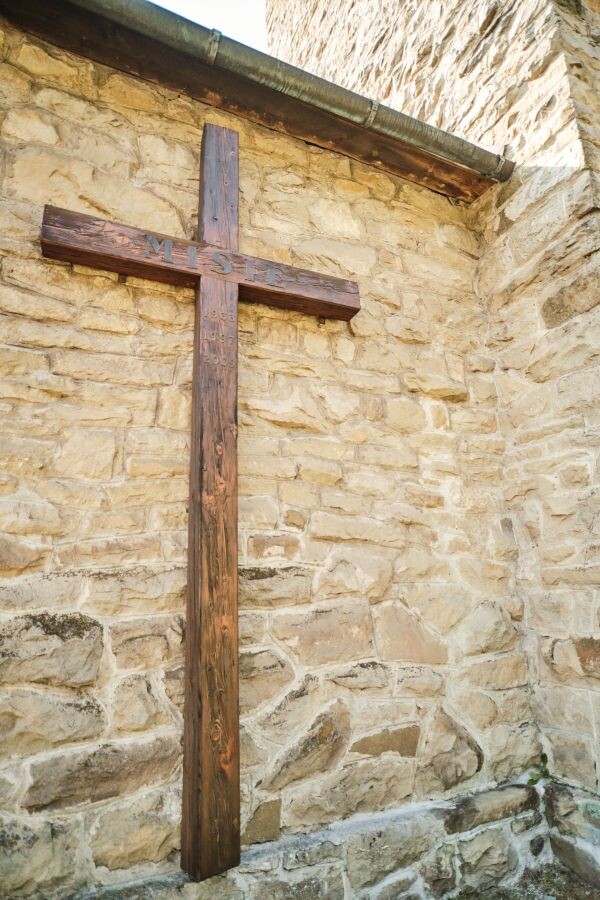
A wooden cross mounted on the façade of the church by the faithful of Kelčov in commemoration of the first Holy Missions held in the new branch church.
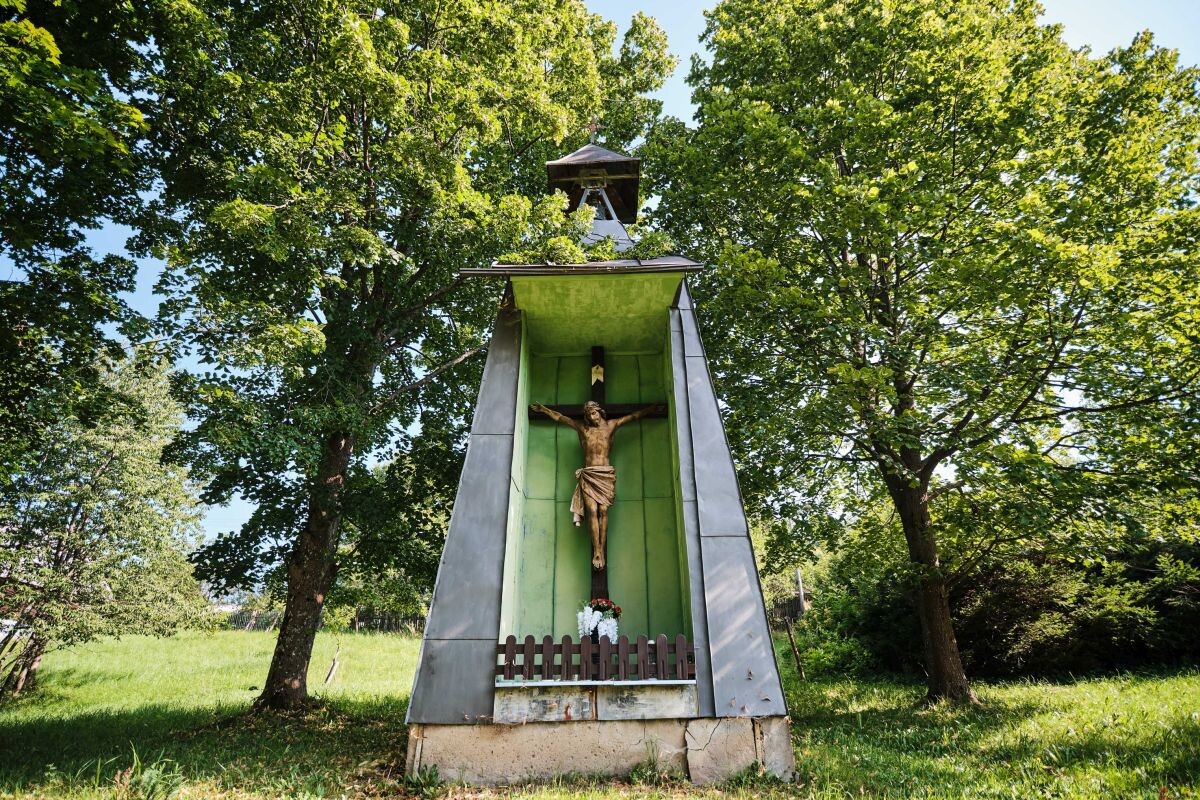
The bell tower is located in the settlement of Adaše and was commissioned by tinker Štefan Hunčík. It is pyramid-shaped with a large front niche that houses a large wooden cross with a wooden Corpus.
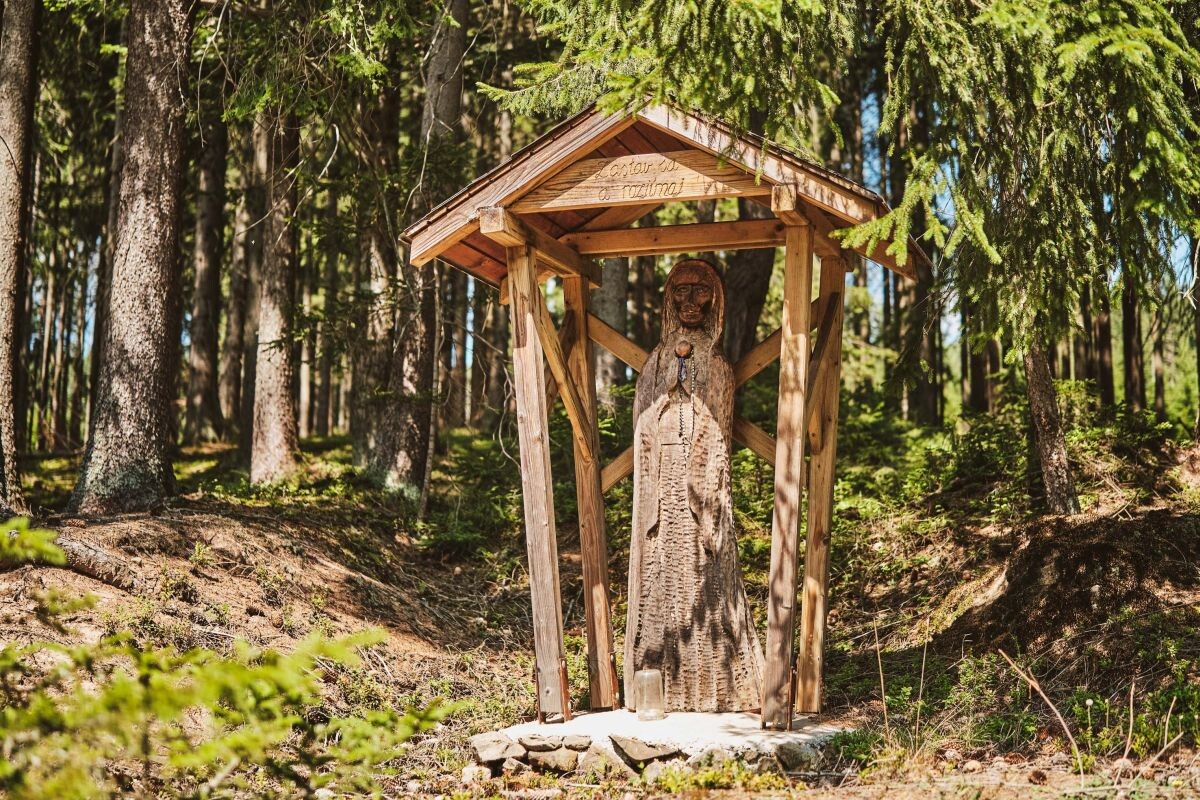
The statue was crafted by folk woodcarver Jozef Legerský and likely depicts the Immaculate Heart of Mary. Her hands rest on her chest, reaching toward her heart.
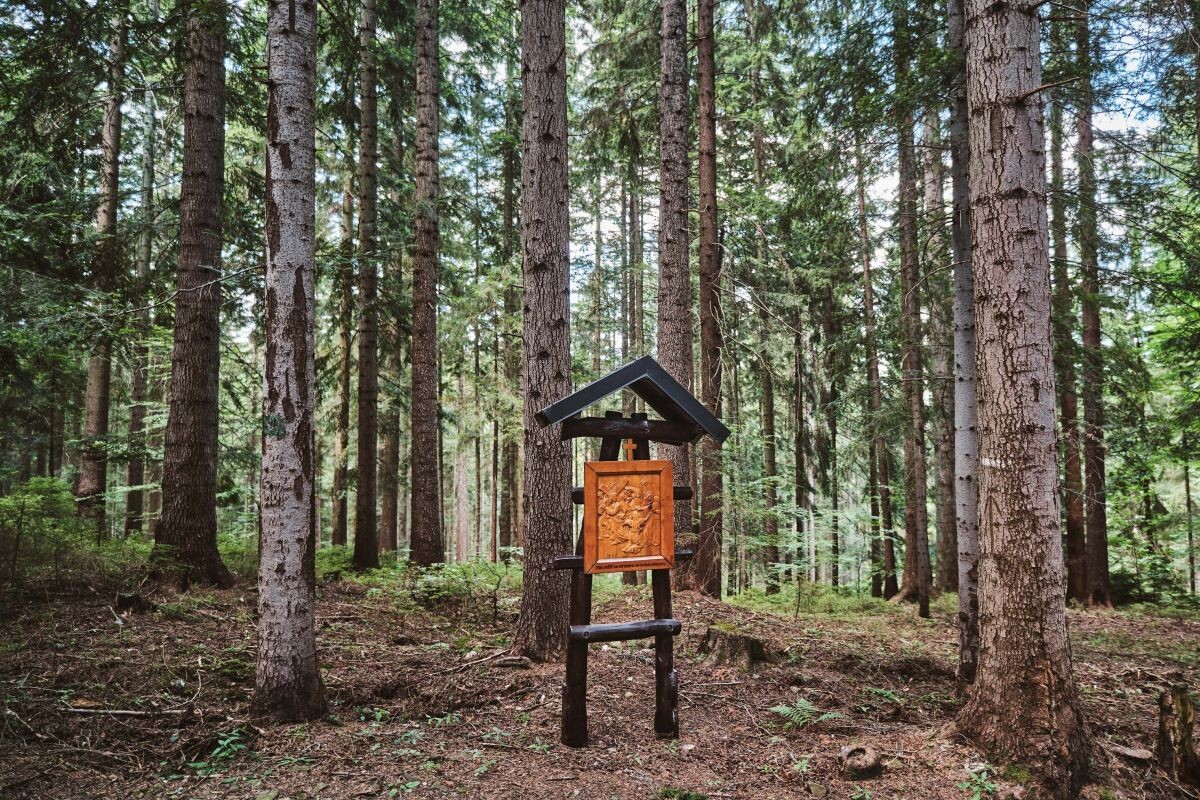
A Way of the Cross with 14 stations, featuring carved wooden reliefs for each station. The square reliefs are mounted on a wooden structure creating a simple shelter, coated in dark brown paint and with a shingle roof.
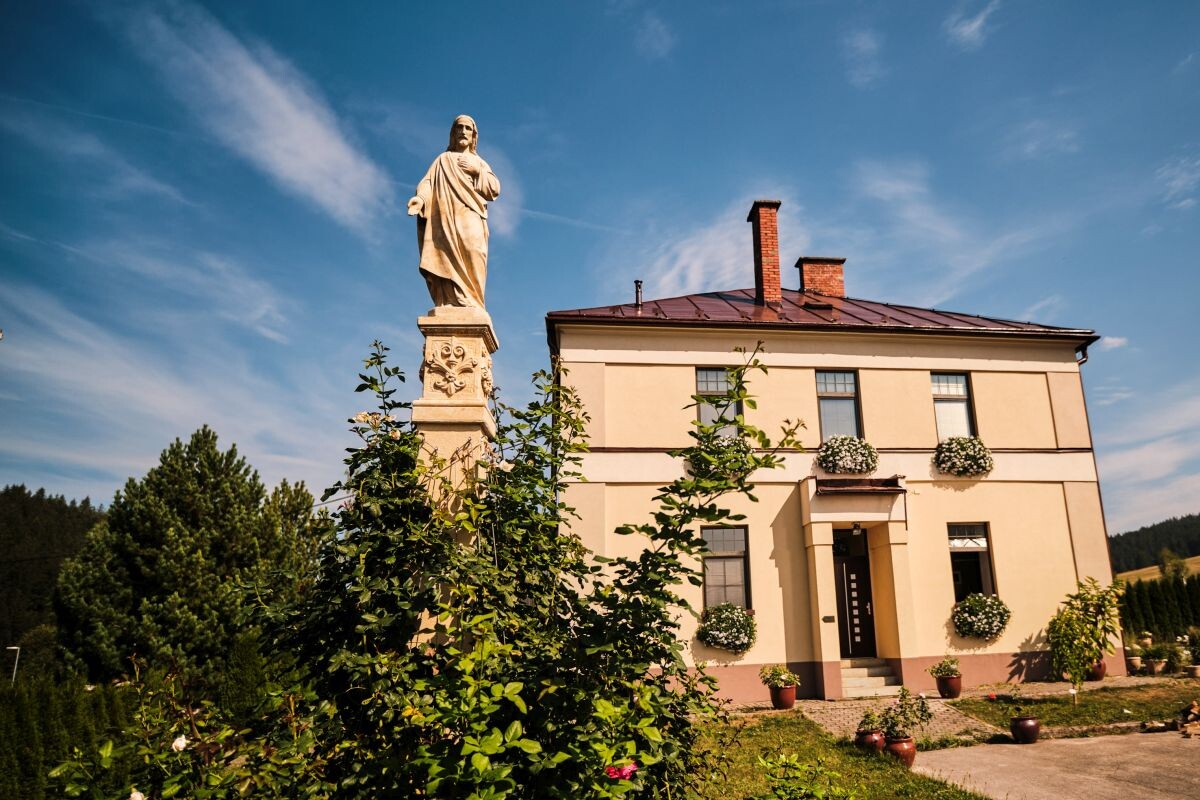
he statue is placed on a stone pedestal adorned at the top. It was purchased in ..... and is of natural color without any paint.
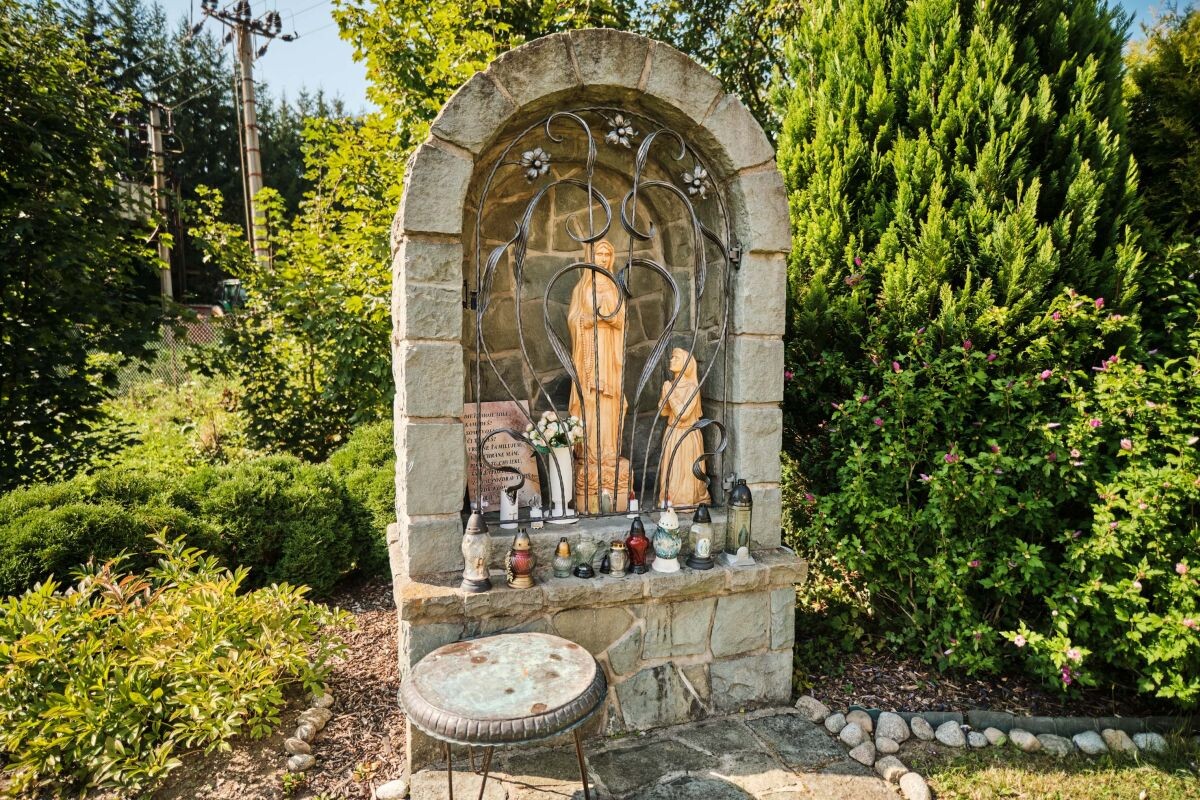
he structure is simple, built from stone blocks in the form of an alcove with a semi-circular top. The statues are set within the alcove, protected by a decorative wrought-iron gate featuring floral motifs.
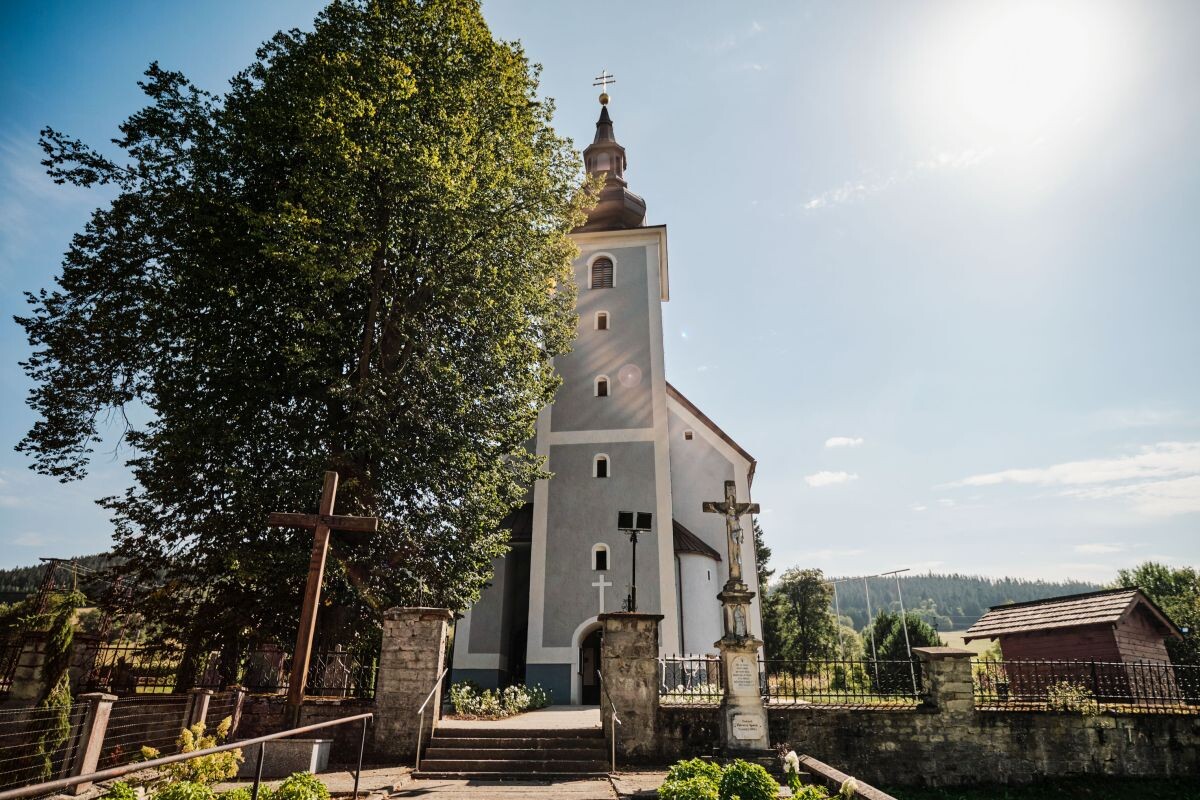
The construction of the Parish Church of St. Matthew the Apostle began in 1767 and was completed in three building phases in the following years. The financial foundation for the church was provided by a fund established by Juraj Rudinec, who was from Vysoká nad Kysucou and at that time he was a parish priest in Balašské Ďarmoty.
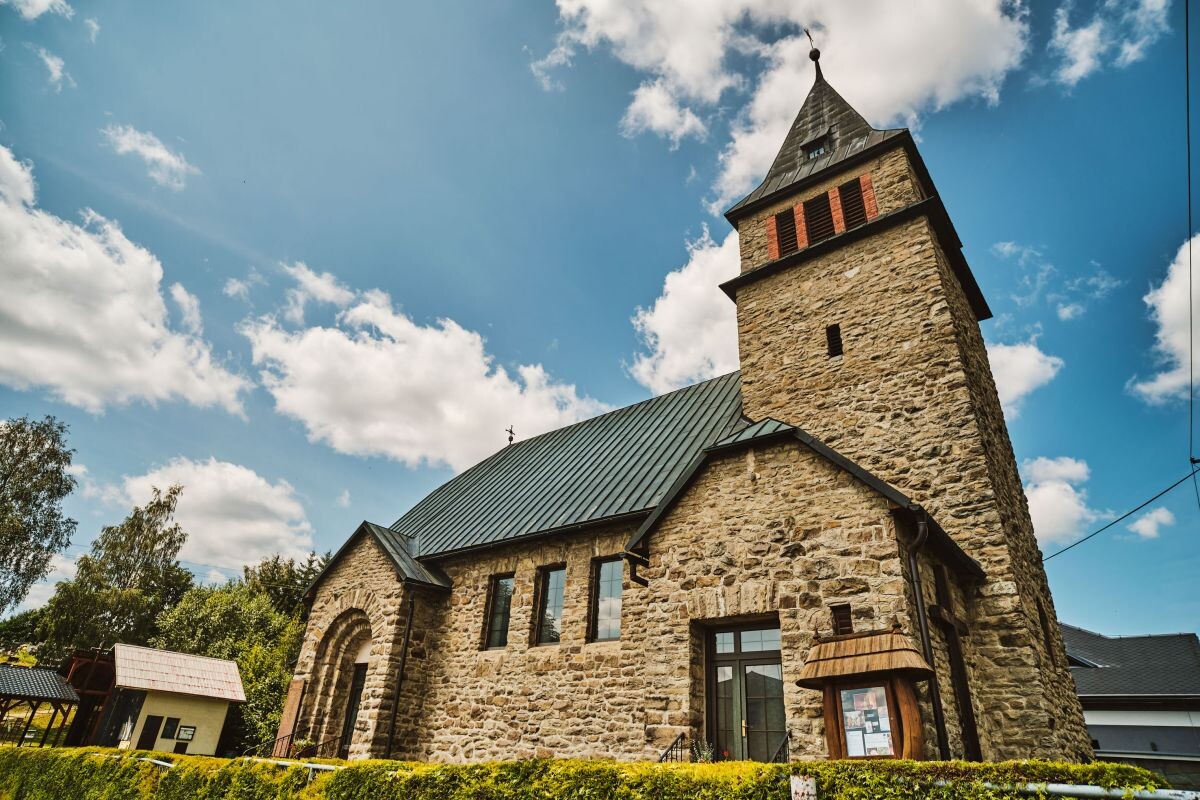
The reason for building the branch church was the considerable distance (7–12 km) that Kelčov's faithful had to travel to reach the parish church, combined with mountainous terrain. Nearly half of the parishioners at the time lived in Kelčov and the settlement of Zátoka.
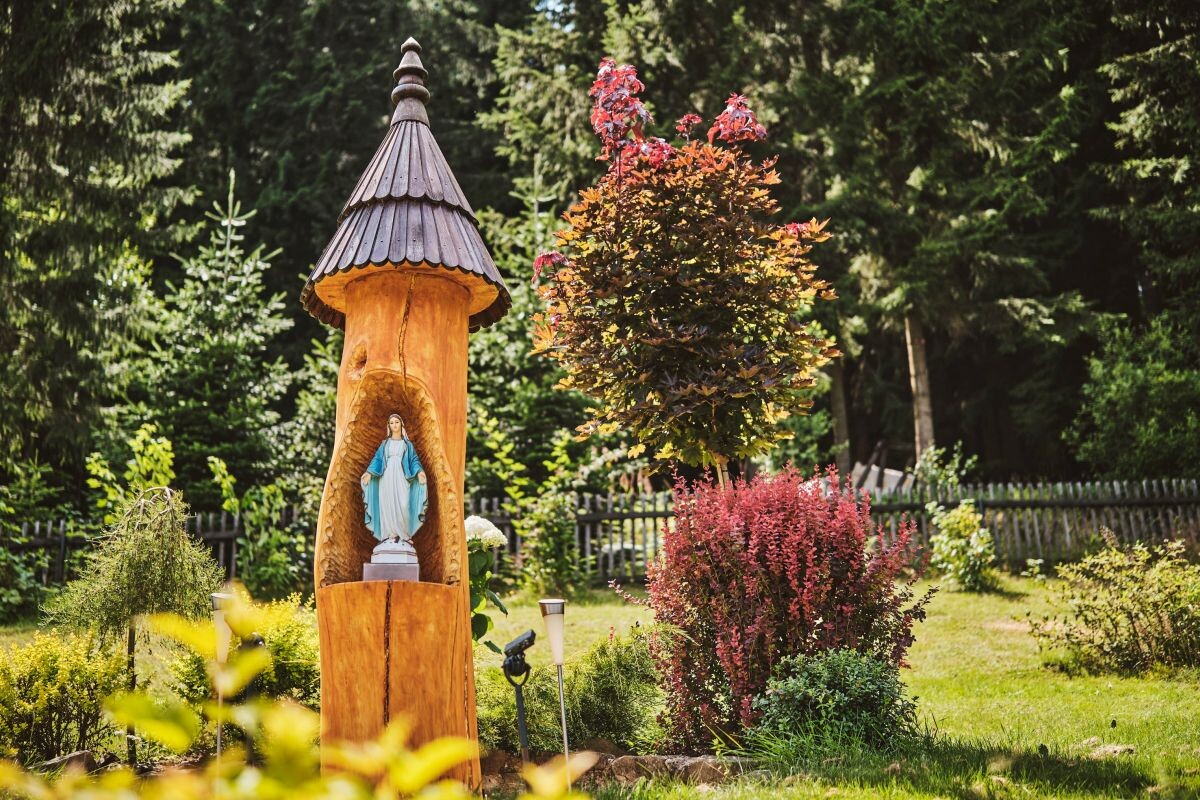
The statue of the Virgin Mary is placed in a niche within a wooden hewn log, which is covered by a shingle roof topped with a carved spire. It is located in the garden of a family house.
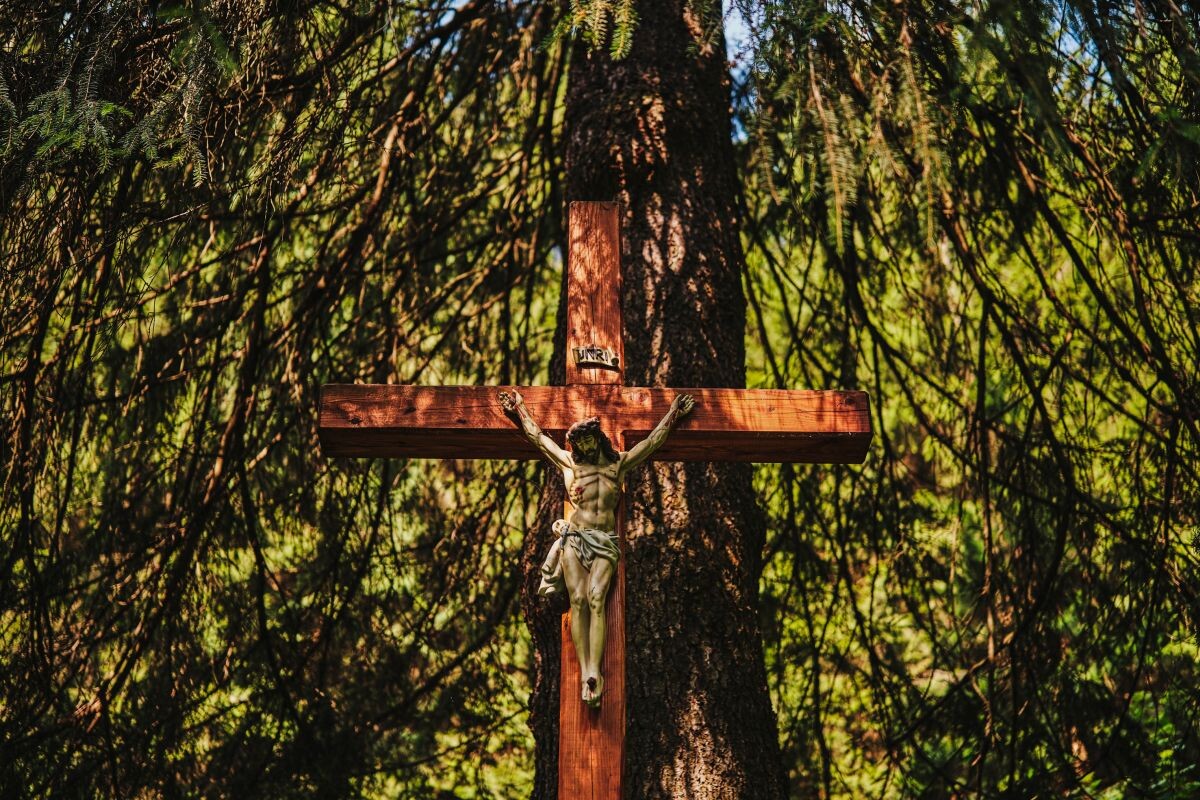
A wooden cross, recently renovated. The original cross was placed on a stone slab (a flat stone), painted green, and was known as the "Green Cross." It had a corpus painted on metal.