 Traditional and historical, peaceful, and humble, and above all rich in natural beauty and attractiveness, this is the region of Kysuce. Everyone will find something here, whether they are looking for relaxation or just want to experience more adrenaline activities.
If you are thinking of visiting this beautiful region, be sure to check the 15 reasons why you should do so.
1. Živčáková
The Marian pilgrimage site Živčáková ranks among the most important pilgrimage sites in Slovakia. Its history began in 1958, when on the feast of the Holy Trinity (June 1), the Virgin Mary appeared to the local peasant in a mountain near the town of Turzovka, on the hill called Živčák. Even after many decades, this holy site accessible from several paths trodden by pilgrims from all over the world, has not lost its charm of silence and peacefulness.
In 2015, a new church was added to the central chapel of Our Lady Queen of Peace from 1993. It is the Church of Our Lady Mother of the Church built thanks to the donations of pilgrims.
Believers coming to this holy place with the intention of seeking, begging, or giving thanks will find several well treated springs of pure mountain water which is attributed to have healing effects. Ways of the cross encouraging the pilgrims to pronounce their prayers are installed on the access roads from Turzovka – Vyšný koniec and from Korňa.
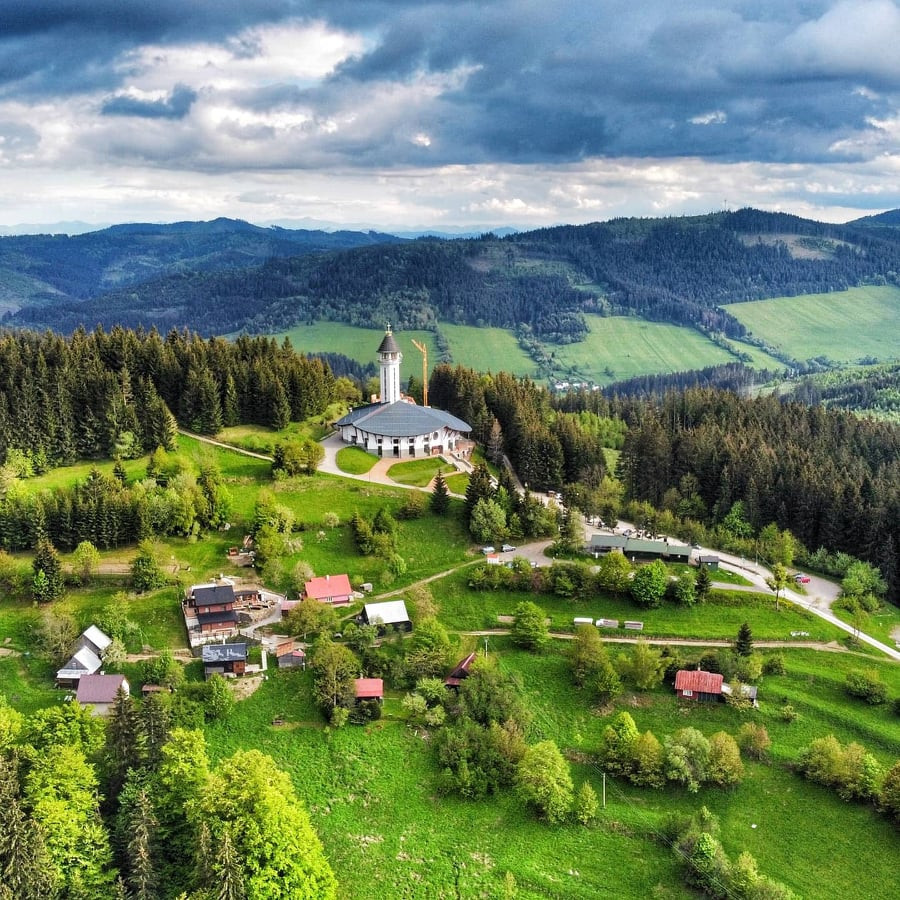
Foto: Stanislav Murgaš
2. Korňa oil spring
Along with the stone spheres in Megoňky and Klokočov, the Kysuce region can be proud of another geological rarity. On its eastern edge, near the settlement of Muchovci in Korňa, there is a rare European unique - a natural surface spring of light oil with occasional spurts of self-igniting methane. The source contains high percentage of oil, which proves the oil potential of the flysch layers. The oil is concentrated in a small pond with a diameter of 1.5-2 m.
Despite its high quality, the oil cannot be extracted for industrial purposes due to a limited amount of the reserves proven by drilling at the end of the 19th century. In 1973, the spring was declared a protected natural creation of inherent rarity and in 1995 it was recategorized as a natural monument.
There is a free access to the spring in the length of approximately 150 m from the parking lot by the main road. A roofed shelter has been assembled in the area.
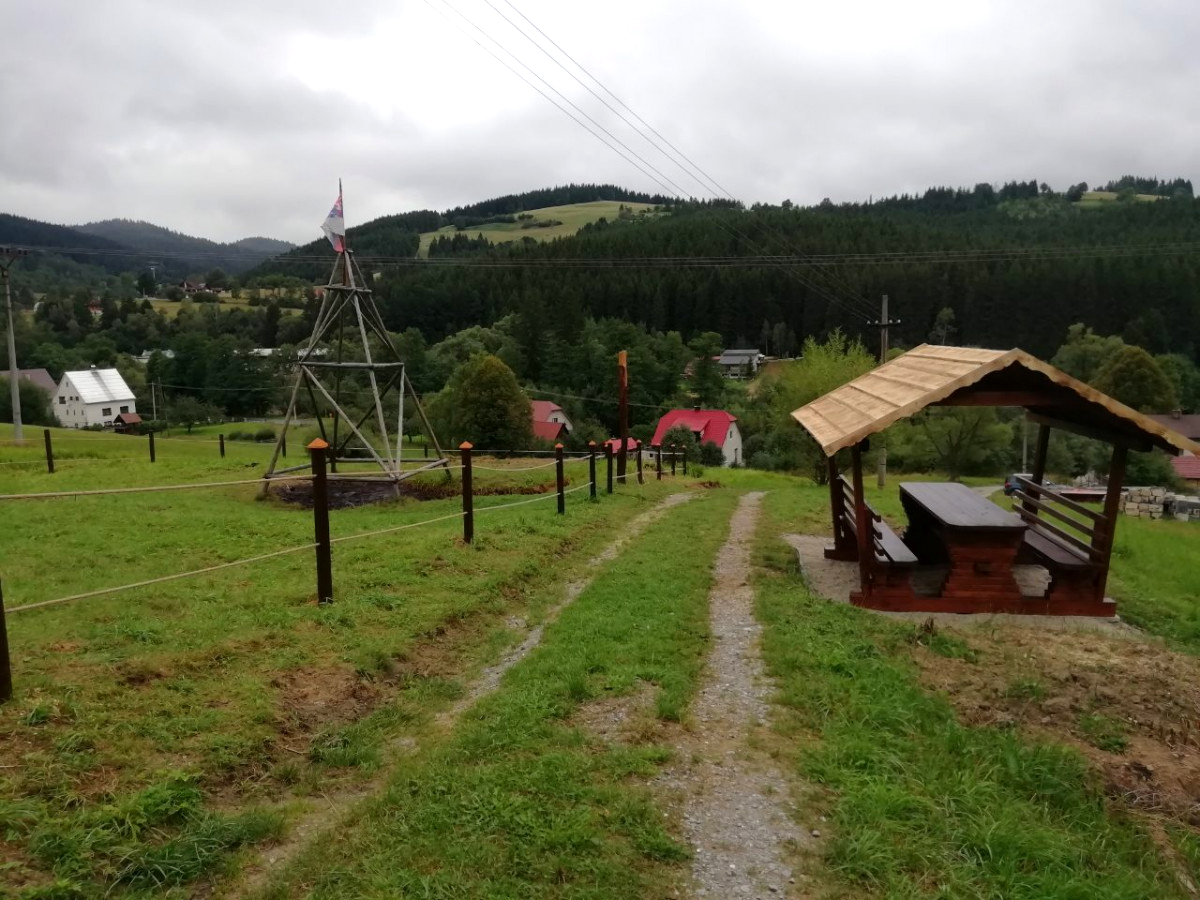
Foto: Obec Korňa
3. Tri-border
In Slovakia, there are just a few geographical points where the boundaries of three countries meet, and one of them is in Kysuce. The place bearing its unrepeatable Genius loci is entitled Kysucké Trojmedzie (the Kysuce tripoint) and connects Slovakia, the Czech Republic and the Polish Republic. Just like the whole of the region, the atmosphere of the point, its specific symbolism of uniting people, cultures, traditions, and the heritage of our ancestors, all of this will make a strong impression. The tri-border plays its role in many cross-border events.
A new bridge has been built over the water stream connecting the Slovak, Czech and Polish side of the border. The triple point can be seen directly under the bridge, it is marked by a small monolith and two roofed shelters with a fireplace on the Czech and Slovak sides. From the Polish side, the tripoint is accessible thanks to the asphalt barrier-free path for cyclists, wheelchair users and strollers.
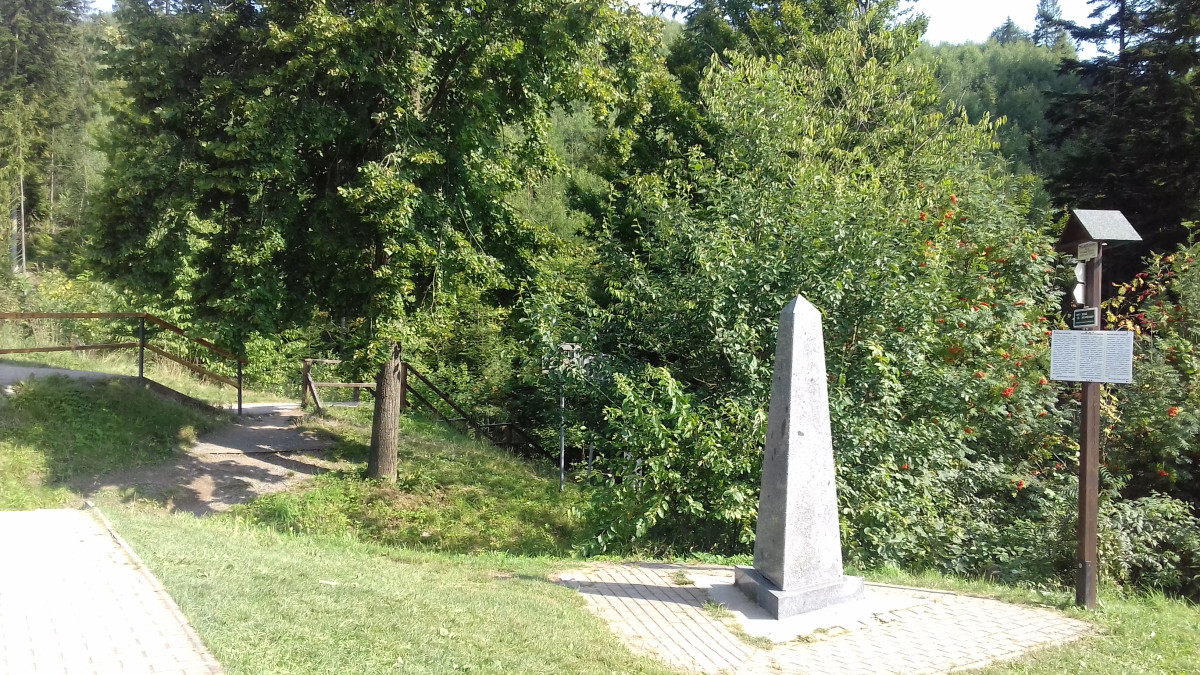
Foto: Emília Maloušová
4. Historical Forest headland railway
A railway overcoming a large elevation over a short distance is a technical unique. Thus, a locomotive that pulled wagons loaded with wood could reach relatively high located places. The historical forest headland railway of such type in the open-air museum of the Kysuce Village in Nová Bystrica - Vychylovka is a national cultural monument.
The railway was established in 1926 and the 110 km long track was originally used to transport wood. In 1970s it disappeared and only an 8 km segment of the rare headland system has been preserved. Nevertheless, there are only two railways in the world of such an exceptional technology.
Currently, a track with a length of 3.6 km serves to carry visitors through the museum grounds. A light rail vehicle with a capacity of 10 passengers can be used to ride through the museum area as well. The vehicle rides on the route Skanzen Station - Sedlo Beskyd three times a day upon a request, while the entire journey takes approximately 2 hours.
The open-air museum of the Kysuce Village is open to the public from May 1 to October 31.
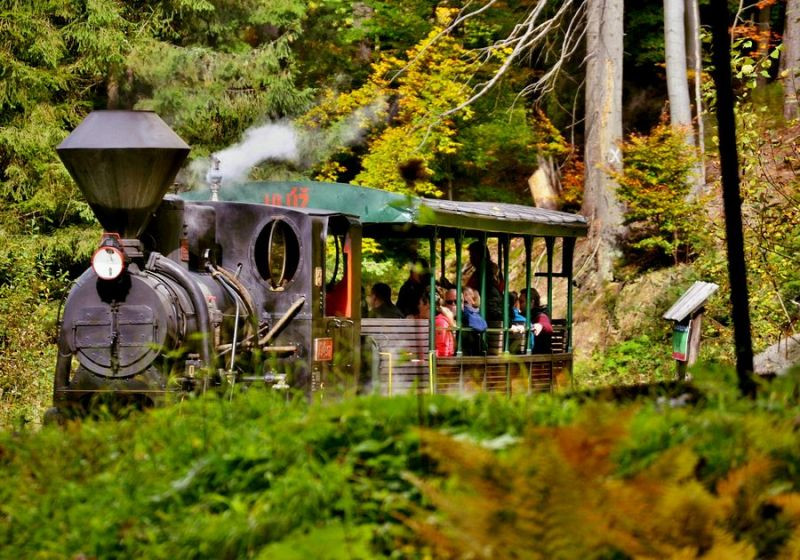
Foto: Kysucké múzeum
5. Stone spheres
The occurrence of stone spheres attracts human curiosity and wakes up imagination as their origin has not yet been explained with certainty. There are currently 16 locations in Kysuce where at least one sphere can be found. The most famous locations involve the Klokočov rocks in the village of Klokočov and Milošová – Megoňky in Čadca.
The educational trail of the Klokočov rocks with a length of 850 m records all the natural attractions found in this location.

Foto: Emília Maloušová
6. Viewing towers in Kysuce
The Region of Kysuce has become "the region of observation towers". Since 2005, their number has been increasing steadily. Do not hesitate and enjoy the stunning view from any of these:
- Mikovčák´s lookout point at Kamenité (834 m above sea level) – the first one, opened in 2005
- viewing tower on Stratenec in the village of Makov (1,055 m above sea level), opened in 2008
- a tourist viewpoint on the peak of Veľká Rača in the village of Oščadnica (1,236 m above sea level)
- viewing tower on Marťak hill above the Petránky settlement in Zákopčie (854 m above sea level) – opened in autumn 2011
- viewing tower on Bobovec in the village of Stará Bystrica (723 m above sea level), opened in August 2011
- viewing tower on Tábor hill above Kysucké Nové Mesto (697 m above sea level) – open from 2015
- new viewing towers in Oščadnica - under the hill of Kalinov - from 2021 and on Dedovka (974 m above sea level) - from 2019
- viewing tower on Hladký hill above the village of Zborov nad Bystricou (761 m above sea level.)
- fire monitoring tower in Harvelka (Nová Bystrica, 723 m above sea level) - from 2019 (entry to the tower is prohibited)
- viewing tower near Jantov in Krásno nad Kysucou (560 m above sea level) from 2020
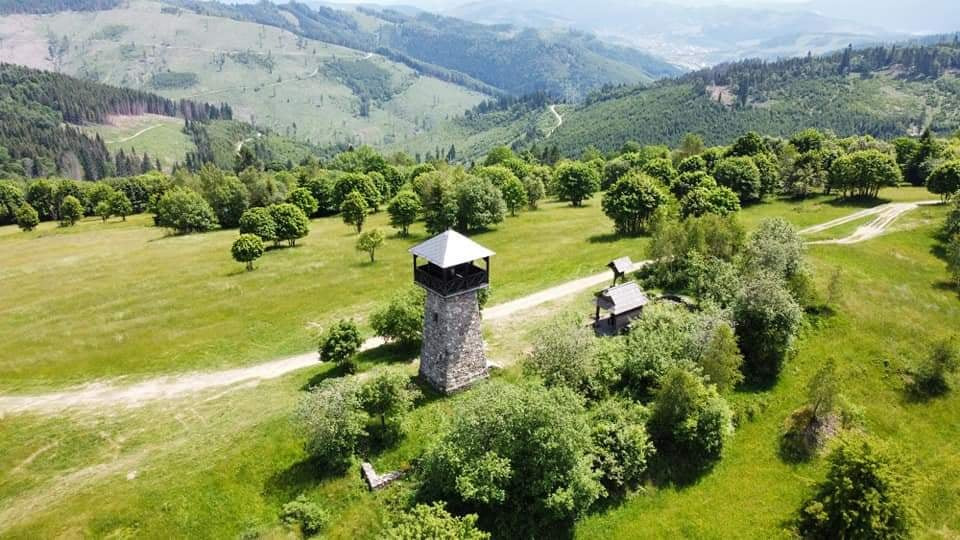
Foto: Stanislav Murgaš, Rozhľadňa na Marťakovskom vrchu nad osadou Petránky (Zákopčie)
7. Source of the river Kysuca
The westernmost village of Kysuce – Makov lies in the mountains of Javorník and Turzovská vrchovina. The municipality of Makov was created by a merger of seven villages in 1895. The village is mountainous and has excellent conditions for hiking and outdoor activities. Veľký Javorník (1070 m above sea level) is the highest point. It is in Makov- nature reserve Hričovec, under the hill Hričovec (1,062 m above sea level), where the river Kysuca has its source.
There are three streams in Makov and there have been long discussion on which is the main source of the Kysuca river. The most abundant one- and therefore the main one - springs above the settlement U Jaši. The spring is at the altitude of 915 m above sea level.
If you follow the local educational trail from Makov to the Pindula saddle (Lemešná saddle) you can even taste the water from the Javorníky mountain range, directly from the source of the Kysuca river. The journey on the trail takes less than half an hour (approx. 2 km).
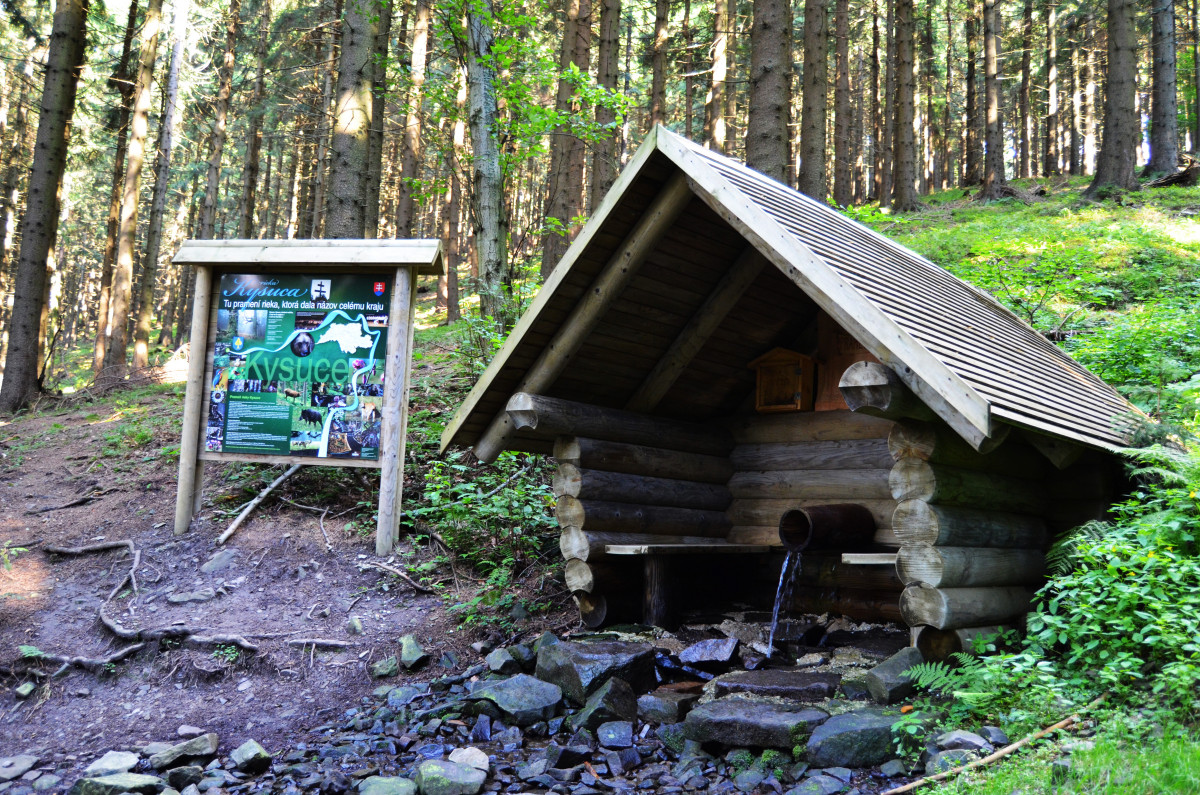
Foto: Emília Maloušová
8. Elm tree in the settlement U Papaji
A unique smooth-leaved elm (Ulmus carpinifolia, Gled), a protected natural creation is included in the state list of rarities, can be found in the settlement U Papaji. The elm is unique in its size, age and location. Its trunk circumference is 30 m at a height 625 cm and 11 meters at the roots, its height reaches 30 m, and its age is estimated by experts to be 400-500 years. With this age, it deserved the title of the oldest smooth-leaved elm tree in Central Europe.
The tree is rare, and its occurrence in Kysuce is exceptional. Although this plant species is officially widespread mainly in the humid European lowlands, the smooth-leaved elm tree in Makov grows at an altitude of 720 m above sea level. m. Due to its rarity, the tree being the symbol of the Municipality, is an important point to reach for visitors to the region.
The environment where the tree grows is truly original, with a typical rural and highland settlement character.
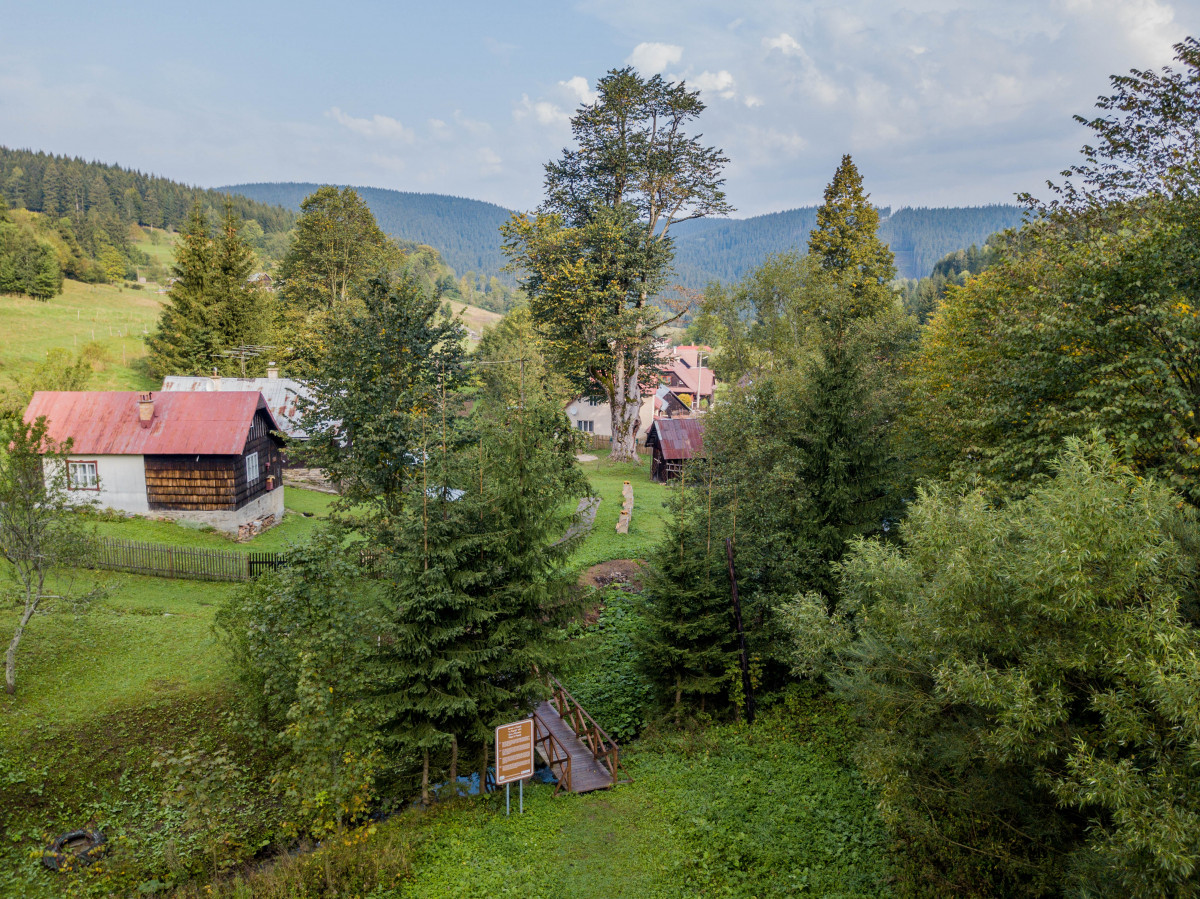
Foto: Ľubomír Sládek
9. The largest summer fun park
This description fits to the Snowparadise Veľká Rača Oščadnica resort, which brings summer entertainment to all generations of guests. You can take the cable car to the top of Dedovka where the attractions are located. Depending on your preferences and your children´s interests, you can choose a descent downhill on scooters, trampolines, a children's rope park, a ride on a bobsleigh or a historical carousel. In the immediate vicinity, there is a newly built lookout tower open all year round. The highest peak of the region, Veľká Rača (1236 m), is within comfortable walking distance.

Foto: www.snowparadise.sk
10. Swimming pool in Čadca
Despite its location in the norh of Slovakia, Kysuce have a few hot days in summer. There is nothing better than refreshing at the Swimming pool in Čadca. It is the only one in the region and is increasingly popular. The swimming pool has a swimming area and space for children's attractions. The water in the pool is heated to approx. 28 °C. There are elements of small sports infrastructure (workout field, table tennis table) and a children's playground in the area. In 2022, a Fairy Tale Bench was added.

Foto: Mesto Čadca
11. Kysuce Hamlets
The life of the Kysuce people is closely linked to the original settlements and hamlets scattered around the region, its remote hills and near towns, in hundreds. The path to them often leads through valleys to higher points, and you will almost always find a chapel or at least a cross in each of them. No wonder, it was just the faith and gratitude that always led the local people through difficult times and accompanied them throughout their lives.
Kysuce is a region of settlements, farmsteads, remote areas and countless "points at the end of the world".
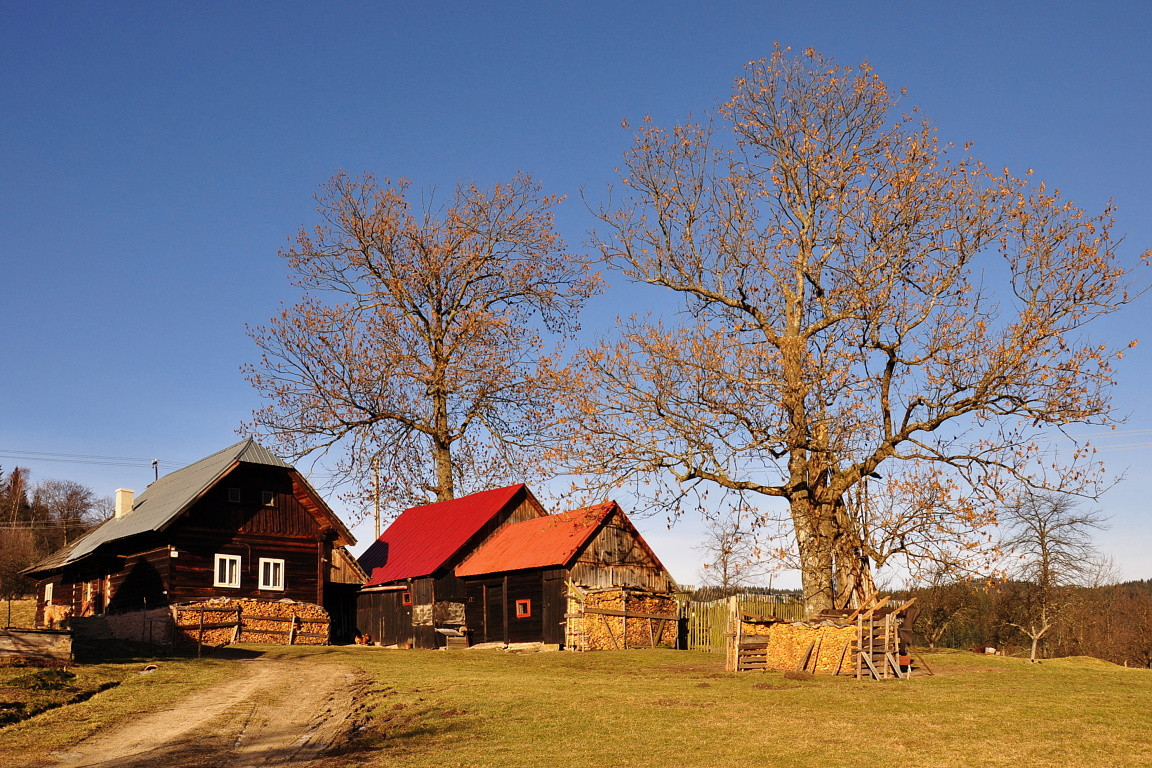
Foto: Klub turistov Kysúc
12. A native house of Jozef Kroner in Stašov
The birthplace of the prominent Slovak actor awarded by an Oscar Jozef Kroner is located near the railway station in Staškov. Jozef Kroner was born in the railway guardhouse "vochterne" in the family of a railwayman on March 20th, 1924. He died on March 12th, 1998, in Bratislava. He used to come back to the village of his birth throughout his life on various occasions.
In 2011, his birthplace was opened to the public as a memorial room. The room shows the artefacts such as the actor's chair, glasses, fishing boots, a cup and a statuette of the Oscar for the film The Shop on Main Street. The room opening and a guided tour is available on tel. numbers: 0944 027 720, 0948 610 807.
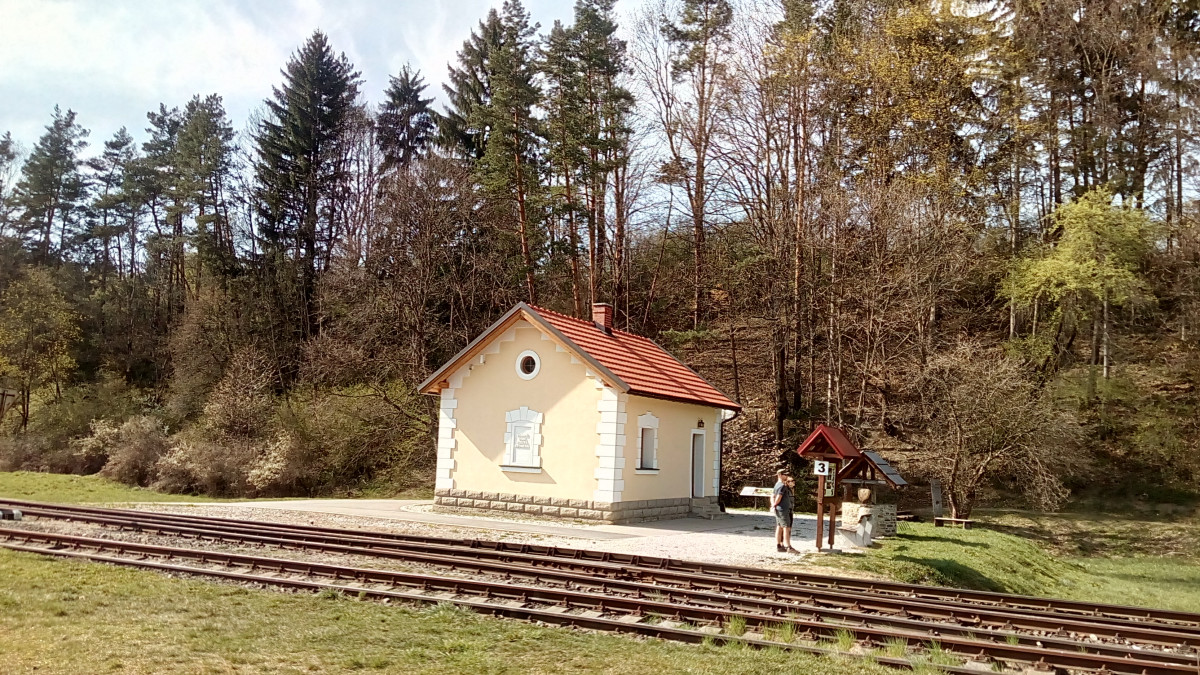
Foto: Ivana Sloviaková
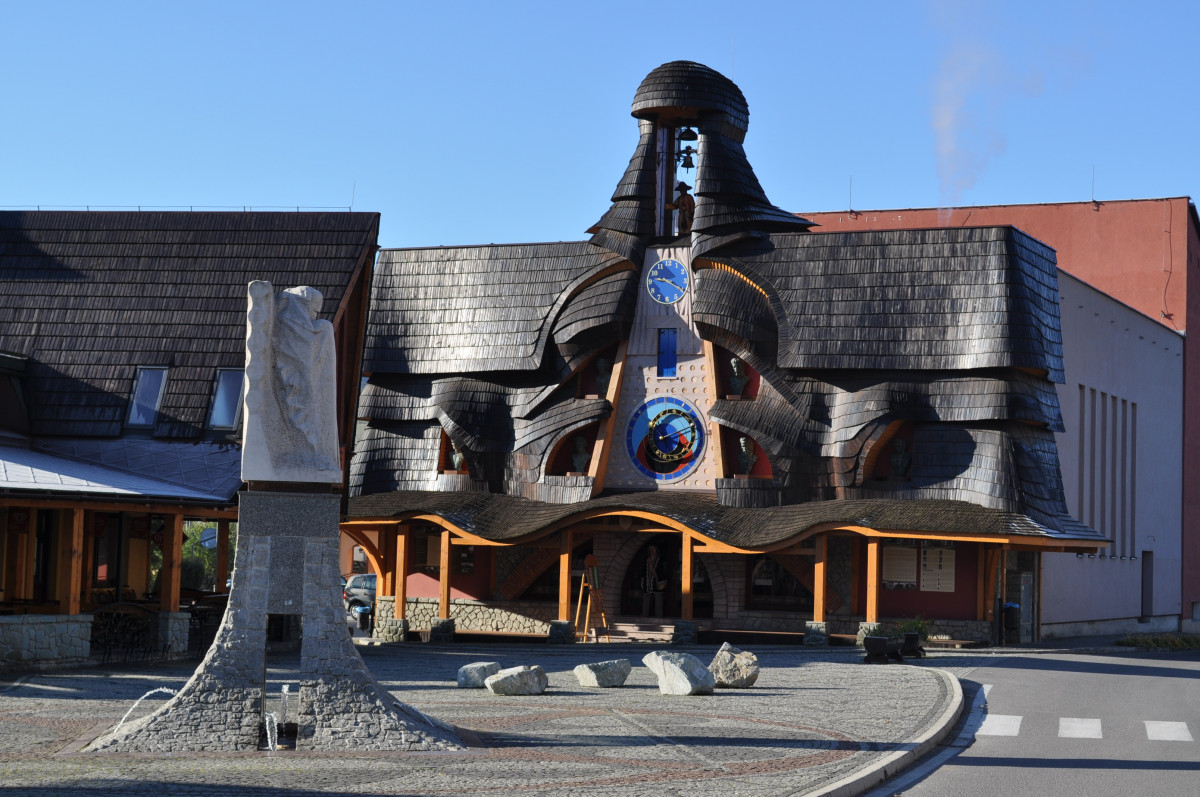
13. Slovak Astronomical Clock in Stará Bystrica
The largest wooden statue in Slovakia can be found in Stará Bystrica. It epitomizes the seated Virgin Mary - the patron of Slovakia. Several architects, carvers, technicians, builders, stonemasons from Slovakia and the Czech Republic participated in its creation and installation.
The niches of the astronomical clock shelter six bronze sculptures: Prince Pribina, King Svätopluk, Anton Bernolák, Ľudovít Štúr, Milan Rastislav Štefánik and Andrej Hlinka and seven statues of Slovak apostles - St. Cyril, St. Methodius, St. Andrej-Svorad, St. Beňadik, St. Gorazd, St. Bystrik and St. Vojtech.
The heart of the astronomical clock, an astrolabe, is a dial with astronomical data. It shows the position of the moon in the sky, the phases of the moon and the position of the sun in the zodiac sign. On the outer edge, there is the so-called calendar board divided into 366 parts and rotating one part every day. Important Slovak holidays and memorial days are marked with a red star on the calendar board.
There are two bells in the tower of the observatory. One bell strikes the time, the other bell creates a sound backdrop during the apostles' promenade.
14. Cycling Route in Bystrice
A 20 km long cycling route is built on the top of the defunct railway on the way from Krásno nad Kysucou to Nová Bystrica. In winter, it is mechanically groomed and suitable for cross-country skiing. The route follows its own track, away from busy roads, on the relatively undemanding terrain (elevation of only 341 m) right in the with all its beauties. The cycling trail from Oščadnica leading to Dunajov is connected to the main cycling route.
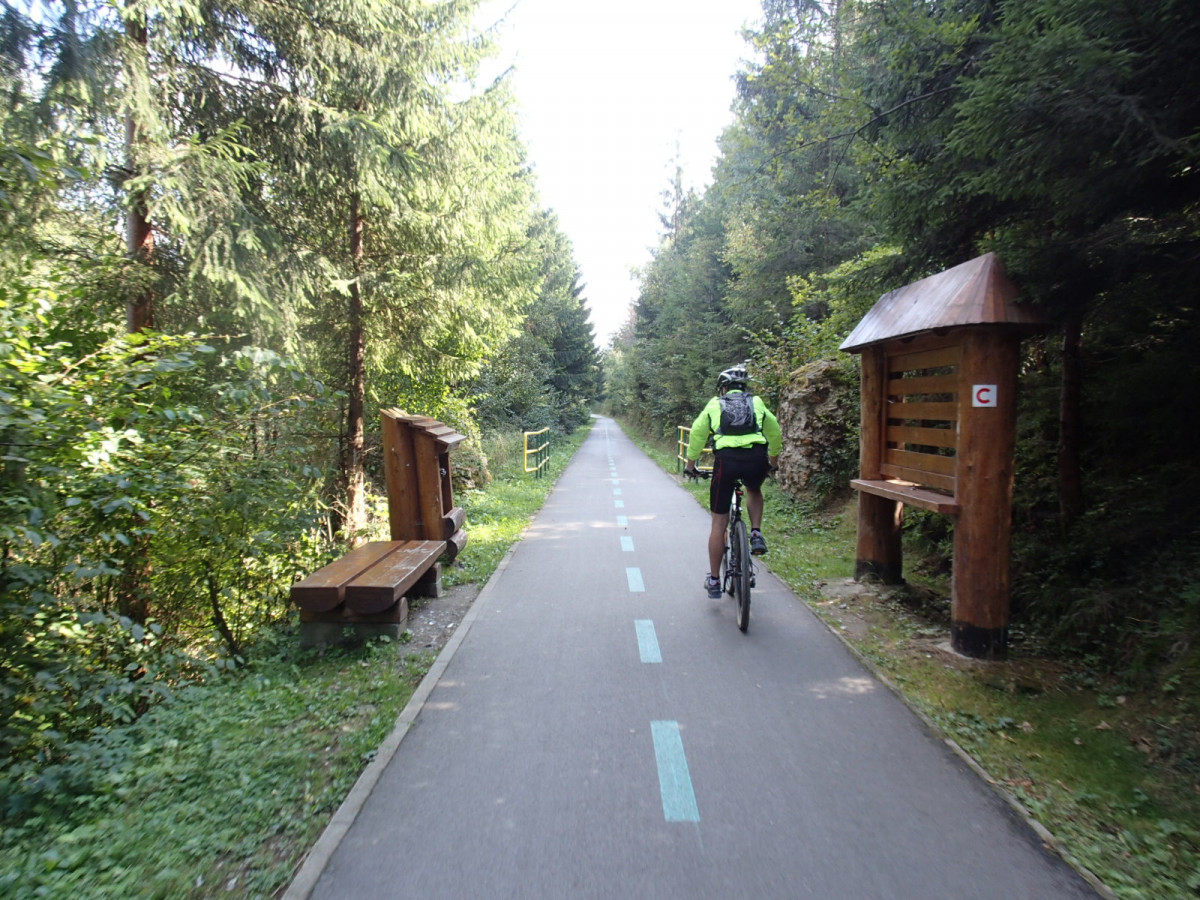
Foto: Emília Maloušová
15. Stone bridges in Krásno nad Kysucou
Stone bridge U Blažkov
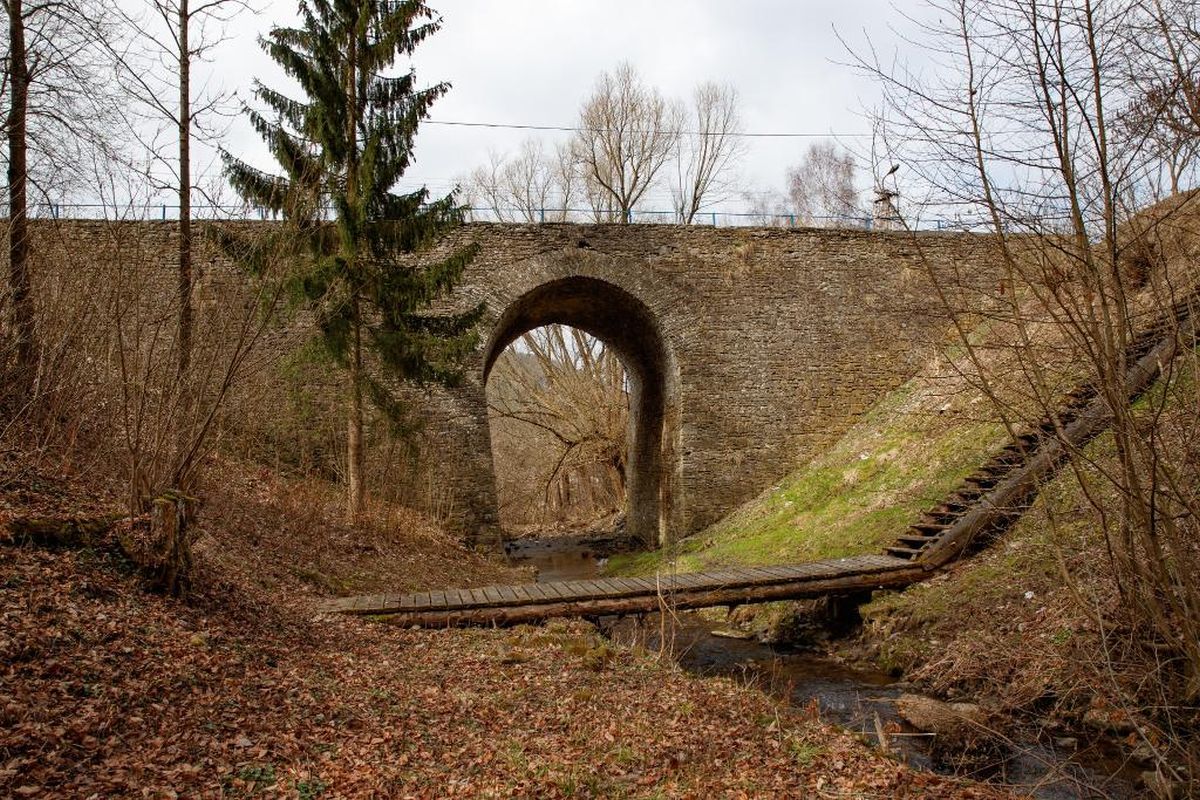
In the 1830s, the area of today's Krásno nad Kysucou was noticed by Italian builders who left their traces in the buildings, especially the loca breath-taking bridges. The construction of the stone bridge U Blažkov is likely to have taken 4 years from 1831 to 1835. There were three bridges in total, all of them designed and built from the same material. One of the builders, Karlo Tajano, married and settled in Krásno.
Most U Blažkov is located at the entrance to Krásno nad Kysucou from Kysucké Nové Mesto.
Reinforced concrete bridge over the Bystrica river
The bridge was built in 1891 by the company Wayss, and its two arches reach a span of up to 16.45 m. There is a statue of John of Nepomuk on the bridge. The reinforced concrete bridge in Krásno nad Kysucou is one of the largest still preserved reinforced concrete bridges in Central Europe dating from the early 1890s when reinforced concrete was introduced as a new technology in bridge construction.
Textové spracovanie z dostupných internetových zdrojov obcí/miest/pamiatok: Emília Maloušová
Úvodná fotografia: Róbert Gajdica (Klokočov)